Wednesday, 17 April 2013

The Accident

The AccidentThe Accident by Linwood Barclay
My rating: 2 of 5 stars

Fresh off of reading a Louise Penny mystery, The Accident is a bit of a shock. Gone are the gentle characters who all want to help solve the crime. Instead, most of the characters can be considered the "bad guys". Short chapters help make this twisting story a quick read. Gaps in logic bothered me.

View all my reviews

Saturday, 13 April 2013

The Beautiful Mystery

The Beautiful Mystery (Chief Inspector Armand Gamache, #8)The Beautiful Mystery by Louise Penny
My rating: 4 of 5 stars

A monk is found murdered in a secret garden of a secluded abbey. Throw in the history of Gregorian chants, memories of the Inquisition, an association with Thomas a Becket, a hidden treasure and a Native legend, and you have the ingredients for this story.

What I love most about Louise Penny's Inspector Gamanche novels is how she interweaves an aspect of fascinating history into the modern-day plot line. We learn about the mythological Gilbertine monks and the pursuit of God-seeking music, as well as drug addiction.

There's a gentleness to Louise Penny's crime stories. There's not a psychopathic thug lurking in every corner and shadow. In fact, in all of her Gamanche novels, the suspects help to solve the crime. Her stories are about ordinary people who are suddenly overcome with passion and kill, then slink back into everyday life.

Since this book is part of a series, there is also a continuing story-line from previous novels. I do want to find out how this wider story arc will play out. At this point, if a reader were interested in starting to read Louise Penny, I would recommend starting with an earlier book, such as Bury Your Dead, to fill in the back story.

View all my reviews

Wikipedia articles on Gregorian chants, and the Gilbertine order.

Monday, 18 March 2013

A Trick of the Light

A Trick of the Light (Chief Inspector Armand Gamache, #7)A Trick of the Light by Louise Penny
My rating: 5 of 5 stars

Four and a half stars.

Featuring a murder in the art world, the story is complex and explores human frailties via the narrative of a murder mystery. Can people really change? How much should we hope? Should we always forgive?

The novel interweaves story-lines from earlier books in the series, but it does explain what has happened in previous episodes, so a reader will not be disadvantaged if he or she is starting with A Trick of the Light. These story-lines help flesh out the main characters of Chief Inspector Armand Gamache and his second-in-command, Jean-Guy Beauvoir. I'm hoping subsequent books will tell us more about Inspector Isabelle Lacoste.

My reading of this book never slowed down for a minute. A Trick of the Light is a well crafted work. My only complaint is that while everyone is suspect, a major clue is kept from the reader to prevent him or her from correctly guessing whodunit.

http://www.theglobeandmail.com/arts/books-and-media/a-trick-of-the-light-by-louise-penny/article600845/

http://articles.washingtonpost.com/2011-09-04/entertainment/35274901_1_cozy-mystery-dead-woman-novels


View all my reviews

Saturday, 16 February 2013

The Emperor of Paris

The Emperor of ParisThe Emperor of Paris by C.S. Richardson
My rating: 5 of 5 stars

Brilliant, original storytelling. At first, I thought this book would be a Michael Ondaatje knock off, but I was wrong. The story is more rooted than an Ondaatje adventure; the mosaic plotting keeps us in suspense. Love, art, imagination, books, and an ending that is really the beginning.

OK, I'm being a bit vague. Here are three local reviews of the novel:

http://www.quillandquire.com/reviews/...

http://arts.nationalpost.com/2012/08/...

http://www.theglobeandmail.com/arts/b...

Also, a link to a CBC podcast of C.S. Richardson's love letter to Paris: http://www.cbc.ca/books/2012/09/cs-richardsons-love-letter-to-paris.html

Lastly, a video of Paris during the time of the novel (1900-1930):


View all my reviews

Tuesday, 12 February 2013

The iPad Experience


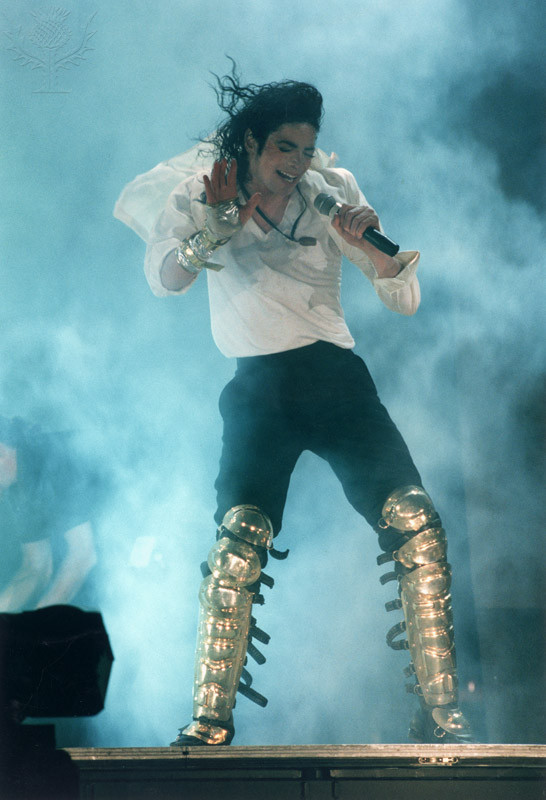
My school board lent selected libraries four iPads each in order for Teacher-Librarians to experiment with how to implement such technology in schools. Here's a summary of what I tried and, yes, Michael Jackson somehow came up during this experience:


  1. Lunchtime book trailers using iMovie: Only two students took the job seriously. The rest spent their time taking random pictures. ALL participants personalized each device. Students who did participate took many shots of books, but did not automatically add narration, video or text. They needed more time and guidance to shape their trailers. So...#2
  2. I wanted to have a whole class create book trailers for a class assignment, but the issue of time, work action, and only four iPads nixed the possibility. Technology in education will only work if everyone has access 100% of the time. Otherwise, why adopt technology, if you are unsure if you'll be able to use it when you need it? It becomes a burden. Teachers will stress about access; lack of access becomes a reason for students to not complete their work. An example of where 100% access to technology has been successful at our school: Each classroom has a teacher computer and a projector. No one has gone "back" to using the overhead projector.
  3. Introduced apps to teachers who are trying to implement the flipped classroom. They loved apps such as ScreenChomp or Educreations.
  4. I let some grade 12 boys during their spare borrow the iPads while they were doing group work. They wanted to be able to access the internet while still gathered around a table. On the downside, they did spend a lot of the time taking pictures of each other (!)
  5.  At lunch I sat with the four iPads on a table. Only senior students came over. Four out of six participants were boys. Their reactions: iPads are good for BYOD, but they thought for schools it would be cheaper to buy Android or Microsoft tablets; otherwise, they felt it would be a waste of money. One student was particularly emphatic about that. He said he would get very angry if we spent money that way. He preferred the idea of buying netbooks.  Regarding the iPads, the students liked the portability factor and thought they would use ScreenChomp and Garageband in the future. They didn't like the fact that they could use Flash and said that the iPad was just an overgrown iPod: a bigger screen, but less portable.
  6. At the end of an MLA workshop with grade 9s (we used the EasyBib app), a group of mostly boys played with Google Earth and asked Siri questions like: What's the meaning of life? Is Michael Jackson  still alive? 
  7. I was giving grade 12s a lesson on research using HaikuDeck. One of the slides I had created with Notability. Instead of copying the text from the slide, I was able to email the students the document straight from the app.
  8. Using the VGA cable to teach with iPad was great! Here's how to connect an iPad to interactive whiteboard: http://www.whiteboardblog.co.uk/2013/02/how-to-connect-your-ipad-to-your-interactive-whiteboard/
  9. Finally, I spoke to a student who had his own iPad mini. He loves it. Right now, he takes class notes on it and plans on using it at university next year to download textbooks. I recommended that he check out Notability, Evernote and Google Docs as writing tools on the iPad. For reading, I suggested he look at iAnnotate and perhaps Citelighter (although I wasn't' sure if it worked on Apple products). Presently, I'm using iBooks to download materials for an online course.
  10. I ran out of memory! I downloaded some TV episodes in HD and found that my 16G iPad nearly burst. Would recommend more memory...if you're interested in buying an iPad for yourself.
  11. Also, check out free access to online Microsoft Word, PowerPoint, OneNote, and Excel vis SkyDrive on your hotmail, live or outlook account. Only OneNote and SkyDrive have dedicated apps. They rest you have to access through a browser. Ironically, I've found that you can only access all the feature if you use the browser.

In the end, I found that the iPad is best used as a personal device. Where I see it being fully used is in a BYOD environment. The iPad begs to be personalized. One, because it can be in terms of aesthetics and app choice, but also because you need to have it linked to your email account to be able to easily share what you create on it.
However, if you have a class set, here are some tips on having shared iPads: http://ipadeducators.ning.com/profiles/blogs/tips-for-sharing-ipads-in-schools
I also would like to keep exploring using the iPad in teaching. As I read over my notes, I see how much students want to "play" with the device. Is that a bad thing (i.e., they are not doing what I want them to do), or am I looking at the possibilities in the wrong way?

Photo credits:
Teacher, Timothy Butt, And Students. Photography. Encyclopædia Britannica Image Quest. Web. 12 Feb 2013. http://quest.eb.com/images/155_2658810
Michael Jackson. Photography. Encyclopædia Britannica Image Quest. Web. 12 Feb 2013. http://quest.eb.com/images/115_2803142

Apple Unveils IPad 2. Photography. Encyclopædia Britannica Image Quest. Web. 12 Feb 2013. http://quest.eb.com/images/115_3823922