Showing posts with label HistoricalFiction. Show all posts

Sunday, 11 February 2018

Top 20 Books I Read in 2017

My friend Natalie asked me to create a top ten list of the books I read in 2017. Of course, I have more than ten. So to celebrate this plethora of riches, I present to you my favourite reads of 2017.

Historical Fiction


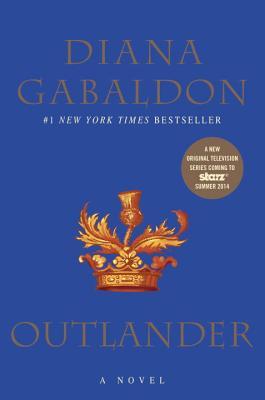
Very different books. Both set in Scotland. There may be a few more Scottish titles on this list. I've been hypnotized by the Edinburgh Book Festival.

I had intended to add book covers and links to all of the books below. But then I'll never get this posted and it's already February. Here goes!

Young Adult

Rodent by Lisa J. Lawrence
Fifteen Lanes by S.J. Laidlaw

Both titles were nominated for the White Pine 2017 awards. Please keep in mind that I'm only listing books which I actually read in 2017. There are a couple of other White Pine 2017 titles that I loved, but I read them in 2016.

Education
Launch: Using Design Thinking to Boost Creativity and Bring Out the Maker in Every Student by John Spencer

Enjoyed meeting up with my Tweeps old and new in the #LaunchBookChat this year!

International
Exit West by Mohsin Hamid
Goblin by Ever Dundas

Essays
Nasty Women by 404 Ink
One Day We'll All Be Dead and None of This Will Matter by Scaachi Koul

Nasty Women led the revolution in the year of the great shake up of #MeToo #BlackLivesMatter and #OscarsSoWhite.

Scaachi Koul's acerbic essays hit the funny bone. Clever book jacket design, too.

Non-Fiction
Sapiens: A Brief History of Humankind by Yuval Noah Harari
Mind blown
The Fact of a Body by Alexandria Marzano-Lesnevich
Finely peeling away the layers of secrets
The Vanishing Man: In Pursuit of Valazquez by Laura Cumming
Winner of the 2017 James Tait Black Prize for NonFiction, a stunning tale of how art can consume us.

Picture Books
The Tale of Tam Linn by Lari Don
Scottish fairytale. A favourite of my niece's.
Journey by Aaron Becker
Only illustrations. Beautiful ones, at that. Great way for pre-literate or early literate children to tell stories.

Literary Fiction
What Belongs to You by Garth Greenwell
Nominated for the 2017 James Tait Black Prize for Fiction
The Last Neanderthal by Claire Cameron
Made me mourn for the extinction of the neanderthal. I want a lip like Girl's. Nominated for the 2017 Rogers Writers’ Trust Fiction Prize.

Mystery
All the Devils by Neil Broadfoot
Broadfoot's writing keeps getting better. Novel is set in Edinburgh. Scotland, yet again!
Glass Houses by Louise Penny
A perennial favourite - it's a good thing that Penny tends to publish a book a year!

Fantasy
A Darker Shade of Magic by V.E. Schwab
This book was partly written in Edinburgh. And it shows.

Short Stories
The 2017 Short Story Advent Calendar by Hingston & Olsen Publishing
Forget about the chocolate - open a new short story every morning leading up to Christmas. Great being introduced to new writers and chatting with other readers about the tales on Twitter. #ssac2017

Poetry
I tend to read bit and bites of poetry, but what got me hooked on poetry this year like never before was the FutureLearn course, "Literature and Mental Health". Highly recommended.

Other Recommendations
This list from Kirsty Logan who read 220 books. Quite a diverse range of books that puts my list to shame. Enjoy!
http://www.kirstylogan.com/best-books-of-2017/


Saturday, 21 January 2017

His Bloody Project

His Bloody Project: Documents Relating to the Case of Roderick MacraeHis Bloody Project: Documents Relating to the Case of Roderick Macrae by Graeme Macrae Burnet
My rating: 5 of 5 stars

Coincidentally, after I finished this book, I listened to a CBC program about Indigenous issues in Canada. Both the book and the interview shared the following aspects:

-19th century racial theories;
-Colonial control over native peoples (in the book's case, the English over the Highlanders);
-and the power struggle between people who are kept under the heel of others.

The powerlessness of Roderick Macrae is what has stuck with me. As Bob Rae said in the interview: "People need the power to control their own lives" or else tragedy follows.

So despite my lack of an "a-ha moment" while reading the novel, I found I gained insight upon digestion.

FYI link to the Interview: http://www.cbc.ca/radio/outintheopen/...

View all my reviews

Sunday, 20 November 2016

Worlds of Ink and Shadow

Worlds of Ink and ShadowWorlds of Ink and Shadow by Lena Coakley
My rating: 5 of 5 stars

Really enjoyed reading this book: It made me believe that many fictional characters are living real lives in alternate realities. Great way to understand the inspirations for the novels of the Bronte sisters. Worlds of Ink and Shadow is a YA book, but as an adult reader, I am frustrated that some of the darker aspects of the Brontes (repressed sexuality, ambition, and rivalry) isn't explored more fully. Hmmm, guess I should pick up a copy of Wuthering Heights or Jane Eyre.

4.5 stars - keep thinking about this book

View all my reviews

Thursday, 28 November 2013

The Painted Girls

The Painted GirlsThe Painted Girls by Cathy Marie Buchanan
My rating: 4 of 5 stars

The Painted Girls is a well-researched piece of historical fiction which asks: What happened to the girl who posed for Edgar Degas’s famous statue, “Little Dancer Aged 14”? There are scant details about Marie van Goethem’s life and those of her two sisters Antoinette and Charlotte. What we do know is that Marie was fired from the Opera’s ballet company for lates and absences and Antoinette was jailed for stealing 700 francs. Then they disappear into history. Their sister Charlotte, we know, became an accomplished ballerina.

Buchanan weaves these scant facts with further research on Paris of the Belle Epoque, and imagination. The narration alternates between the voices of Marie and Antoinette. By divvying up the narration, Buchanan shows how few choices lower class women had in late 19th century Paris. After awhile, I wondered, what the story would have been like without the clockwork alternation between the two sisters.


During this period of time, scientists tried to prove that character could literally be read on the faces of people, with studies showing that certain facial characteristics demonstrated “innate criminality”(304). In the end, I questioned how Degas really felt about Marie. In the novel, he was only interested in her at the point between being a girl and becoming a woman. In reality, he stopped painting her, but we don’t know why. Reviews of her statuette comment on her ugliness and how the artwork “imprints her face with detestable promise of every vice” (316). Both Marie and Antoinette are certainly at the mercy of unscrupulous men. There are very few good men in the book, in fact.

The ending of the novel, however, demonstrates the love and tenderness the author feels for her subjects. In truth, I wonder, how often such an ending happened for real people. Perhaps.

The Painted Girls is an illuminating read about this certain time and place and I enjoyed learning more about that era. I also liked reading Cathy Marie Buchanan’s website and comparing Degas’s work to her fictional characters. A great cross-pollination of media.

http://www.cathymariebuchanan.com/boo...

Other reviews:

http://www.theglobeandmail.com/arts/b...

http://www.quillandquire.com/reviews/...

http://www.thestar.com/entertainment/...


Essays on historical fiction:

http://www.newyorker.com/reporting/20...

http://ihrconference.wordpress.com/20...


View all my reviews

Image credit:
AgnosticPreachersKid. Degas. 25 Feb. 2011. Wikimedia Commons. 20 Oct. 2014. Web. 15 Sept. 2016.

Tuesday, 13 August 2013

Marvel 1602

Marvel 1602Marvel 1602 by Neil Gaiman
My rating: 5 of 5 stars

Bloody brilliant.

Placing Marvel characters such as Spider-Man, the X-Men, the Fantastic Four and Daredevil at the time of Elizabeth I demonstrates how universal and enduring comic themes are.

The graphic novel could be purchased by schools for pleasure reading, but also to look at character archetypes, dramatic narrative, historical research, and how to visualize a story.

"So what are these fundamental principles...?"

"Stories. And they give me hope.

"We are a boatful of monsters and miracles, hoping that, somehow, we can survive a world in which all hands are against us. A world which, by all evidence, will end extremely soon.

"Yet I posit we are in a universe which favours stories.

"A universe in which no story can ever truly end; in which there can be only continuances."


For more see: http://en.wikipedia.org/wiki/Marvel_1602

View all my reviews


Friday, 2 August 2013

Death in Breslau

Death in Breslau: An Eberhard Mock InvestigationDeath in Breslau: An Eberhard Mock Investigation by Marek Krajewski
My rating: 4 of 5 stars

The Independent described this book “as noir as they get”. I also love some of the other reviews. They give you a sense of the muscle in the book:

“A dark and compelling novel, full of perverse sex and violence as the world begins to spin off its axis.”
-The Mail on Sunday

“The city of Breslau is as much a character in this thriller as the parade of gothic loons that inhabit it...This addictive soup has an air of burlesque about it.”
-The Daily Telegraph

“Krajewski relishes the period detail as takes us from bloody interrogation cells to Madam LeGoef’s sweaty bordello...What’s haunting about Krajewski’s book, however, is the worst was yet to come.”
-Independent on Sunday

There’s something about a corrupt police department still trying to uphold the law and do what’s right. They need devious means to cut through the criminality of others. It’s a power struggle between bad, evil and ultimate evil.

Set mostly in interwar Germany, bordering on Poland, in a city which would become Polish again after WWII, the Machiavellian protagonist, Eberhard Monk, tries to solve the chilling murders of a young girl, her nanny and a railway worker.

What I love about the book is that Mock, for all his dastardly methods, is still the good guy. After all, the ends do justify the means when you’re dealing with the Nazis. Ironically, he still longs to be a “[m]an pure, by crime untouched.”

Breslau is the perfect setting, with its own layers of multiple identities.

There are many dead cluttering the stage by the end of the book. Indeed, for all the blood and gore, it feels as if there are only two people surviving by the conclusion.

The writer sets out clever clues for the reader. We get to understand what is going on just before the characters do. Just, just.

I would have liked the translation to have been a little less melodramatic. It may be echoing the original book, but I haven’t seen the Polish edition.

View all my reviews


Monday, 17 June 2013

Lost Cause

Lost Cause (Seven, #2)Lost Cause by John Wilson
My rating: 4 of 5 stars

Love the concept of this series. A grandfather leaves his seven grandsons specific tasks and adventures in his will.

LOST CAUSE concerns Steve discovering his grandfather's involvement in the Spanish Civil War. The book does a great job at weaving in historical facts and ambiguities. I would say that is a good choice for a reluctant readers, except that sometimes I found the writing a bit patronizing.

The series could be used for literature circles, as well as research on the contexts and locals of each novel.

View all my reviews

Saturday, 13 April 2013

The Beautiful Mystery

The Beautiful Mystery (Chief Inspector Armand Gamache, #8)The Beautiful Mystery by Louise Penny
My rating: 4 of 5 stars

A monk is found murdered in a secret garden of a secluded abbey. Throw in the history of Gregorian chants, memories of the Inquisition, an association with Thomas a Becket, a hidden treasure and a Native legend, and you have the ingredients for this story.

What I love most about Louise Penny's Inspector Gamanche novels is how she interweaves an aspect of fascinating history into the modern-day plot line. We learn about the mythological Gilbertine monks and the pursuit of God-seeking music, as well as drug addiction.

There's a gentleness to Louise Penny's crime stories. There's not a psychopathic thug lurking in every corner and shadow. In fact, in all of her Gamanche novels, the suspects help to solve the crime. Her stories are about ordinary people who are suddenly overcome with passion and kill, then slink back into everyday life.

Since this book is part of a series, there is also a continuing story-line from previous novels. I do want to find out how this wider story arc will play out. At this point, if a reader were interested in starting to read Louise Penny, I would recommend starting with an earlier book, such as Bury Your Dead, to fill in the back story.

View all my reviews

Wikipedia articles on Gregorian chants, and the Gilbertine order.

Saturday, 16 February 2013

The Emperor of Paris

The Emperor of ParisThe Emperor of Paris by C.S. Richardson
My rating: 5 of 5 stars

Brilliant, original storytelling. At first, I thought this book would be a Michael Ondaatje knock off, but I was wrong. The story is more rooted than an Ondaatje adventure; the mosaic plotting keeps us in suspense. Love, art, imagination, books, and an ending that is really the beginning.

OK, I'm being a bit vague. Here are three local reviews of the novel:

http://www.quillandquire.com/reviews/...

http://arts.nationalpost.com/2012/08/...

http://www.theglobeandmail.com/arts/b...

Also, a link to a CBC podcast of C.S. Richardson's love letter to Paris: http://www.cbc.ca/books/2012/09/cs-richardsons-love-letter-to-paris.html

Lastly, a video of Paris during the time of the novel (1900-1930):


View all my reviews

Wednesday, 28 November 2012

Ru

RuRu by Kim Thúy
My rating: 5 of 5 stars

An arrangement of poetic vignettes. On the surface, Ru explores family, war, living as a refugee and integration into a new country. Underneath, Thuy ruminates on culture, conflict, language, love and memory. There’s a whole lot going on in this slender, beautiful novel.

What do you take with you when you flee your homeland? It is not what you think.


View all my reviews

Tuesday, 21 August 2012

The Salt Road

The Salt RoadThe Salt Road by Jane Johnson
My rating: 2 of 5 stars

I had tears in my eyes while reading this book: First, out of frustration; then, ultimately, from being swept up by the story and its emotional resolution.

The Salt Road is very much a romantic book. Set in exotic Morocco and following the fate of a disappearing nomadic tribe, the novel intertwines a mystery and a story of enduring love. I settled myself for a perfect summer read, anticipating to be transported to the desert and be immersed in the nomadic culture.

Unfortunately, I was jarred by the very Western point-of-view of the book. The protagonist, Izzy, goes to Morocco after her estranged father’s death. He left her a riddle in the form of an amulet. I found her to be petty and petulant. I often thought to myself: Why does the author want her to be so unlikeable? The ending of the story does offer an explanation, but the justification and the transformation happen so quickly that we don’t really have enough time to “forgive” Izzy or Jane Johnson for Izzy’s character.

I also found that the plotting was clunky. Events happen in quick arrangement: Johnson apparently wants to get her characters into position, but I questioned her choices. For example, Izzy arrives in Morocco with her friend Eve. They are ostensibly there to do rock-climbing, their hobby, but really they are there to answer the riddle of the amulet. The two girls meet up with Miles and Jez and decide to go climbing together. On their first day out, Izzy wrenches her ankle, and through a convoluted series of ropes and levers, is left literally hanging near the bottom of the climb. Luckily, Taib, is passing by to catch her.

From that point Eve, Miles and Jez disappear from the novel. In my opinion, I would have cut them out of the story all together, have Izzy travel to Morocco on her own. Izzy, on her own in Morocco, would have provided ample material for her to be in some sort of danger and be rescued to Taib, thereby propelling the rest of the story. Despite Izzy’s persnickety behaviour, there were times when I thought: She’s my kind of woman. The only book she’d brought with her was a biography of Gertrude Bell (yes!). She has no time for her friend’s “girlie novel” as it “utterly failed to hold [her] attention after two pages of inconsequential chatter about shoes and boyfriends”(147).

To reduce the amount of characters and transitions perhaps would allow Johnson to show more and tell less. There is a list of sources at the back of the book, so she has done her research. I would just like the research to show more in the details and nuances of the book.

Lastly, until the final fifth of the book, some of the writing drove made me feel like I was “juddering over...rutted ground”. Lines like, “every tooth in my head was rattling and I was blessing the fact that I was small-breasted and supported by a good underwired bra” (203) made me wince.

On the other hand the line and the sentiment, “Love is the strongest force in the world” (373) is never trite and always a story I want to read.

The Salt Road had the potential to enrapture me with its search for a past denied. I did learn something about the Touareg people and history, but I wanted to see Izzy enter the culture more fully and develop relationships instead of hearing a lecture from one of the characters. Still, the ending left me moved: The novel does evoke the power of love.


View all my reviews

Tuesday, 22 May 2012

The Song of Achilles

The Song of AchillesThe Song of Achilles by Madeline Miller
My rating: 2 of 5 stars

Some good poetic images, but the book read more like a young adult romance than an epic tale.

Link to book review from NY Times:
http://www.nytimes.com/2012/04/29/boo...

View all my reviews

Sunday, 20 November 2011

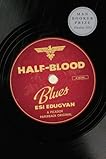
Giller 2011 Reviews: Half-Blood Blues

Half Blood BluesHalf Blood Blues by Esi Edugyan

My rating: 3 of 5 stars

The story of Half-Blood Blues revolves around two African-American jazz musicians, Sid and Chip, as well as Hiero, a wunderkind half-German, half-Senegalese trumpet player. The action begins in 1939 Berlin and then moves between 1992 Berlin and Poland, and 1939 Paris.

Here’s what I loved about Half-Blood Blues: the crackling dialogue, the history, and the brilliant beginning of the novel. The cover is absolutely gorgeous, and once you develop an ear for the dialect, the book is quick to read.

Unfortunately, many things in Half-Blood Blues bothered me. As soon as the characters go into hiding from the Nazis, the pace crawls. Perhaps this tempo is a result of Sid the narrator becoming a passive observer of events. He just watches all the other characters take action. This passivity meant I couldn’t get a good sense of who Sid really was, and that affected how I perceived the relationships in the book. I did not get the feeling that he was particularly ambitious (one of the possible motivations in the story, but he gets over slights quickly) and I kept wondering what the story would be like if another character had told it.

I would have loved to have seen more of an exploration of identity, half-bloodedness (as the title suggests), and the irony that African-Americans went to interwar Europe to escape the racism back home. These elements are touched upon by Sid mentioning that some of his family pass for white, his girlfriend Delilah’s “mixed-race face”, and rival Hiero’s stories about who his father was. One of the telling details I really liked was the shocking visit to Hamburg’s Hagenbecks Zoo.

But there are many contradictory details: For example, Hiero carries his trumpet with him everywhere, then suddenly does not have it with him when they flee Berlin; Sid and Chip are able to give a history lecture to Louis Armstrong about German culture, but they don’t know that France has declared war on Germany. Also, the idea that a black man was able to live peacefully in a remote Polish village during communism, doesn’t jive with my experiences of visible minorities in Eastern Europe.

As well, Sid is aware that he speaks with a dialect and claims Hiero has transposed the dialect into German. But Hiero doesn’t understand English, so how does he create a Baltimore-German accent? It’s also linguistically questionable because German has a different syntax.

There are flashes of genius when the characters start to talk about friendship, love, art and sacrifice, but the heart of the discussion comes too late in the book and ends too soon.

Half-Blood Blues did give me with a chance to witness Nazi-occupied Europe through a new lens, but I find myself looking to Edugyan’s reading list at the end of the book, to help provide the grit and details of how a person like Hiero would have survived.

View all my reviews