Showing posts with label CanLit. Show all posts

Sunday, 11 February 2018

Top 20 Books I Read in 2017

My friend Natalie asked me to create a top ten list of the books I read in 2017. Of course, I have more than ten. So to celebrate this plethora of riches, I present to you my favourite reads of 2017.

Historical Fiction


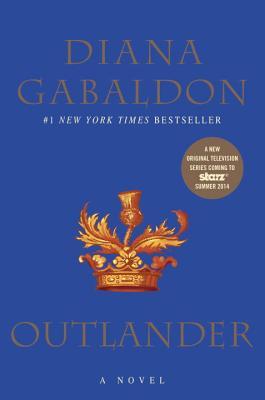
Very different books. Both set in Scotland. There may be a few more Scottish titles on this list. I've been hypnotized by the Edinburgh Book Festival.

I had intended to add book covers and links to all of the books below. But then I'll never get this posted and it's already February. Here goes!

Young Adult

Rodent by Lisa J. Lawrence
Fifteen Lanes by S.J. Laidlaw

Both titles were nominated for the White Pine 2017 awards. Please keep in mind that I'm only listing books which I actually read in 2017. There are a couple of other White Pine 2017 titles that I loved, but I read them in 2016.

Education
Launch: Using Design Thinking to Boost Creativity and Bring Out the Maker in Every Student by John Spencer

Enjoyed meeting up with my Tweeps old and new in the #LaunchBookChat this year!

International
Exit West by Mohsin Hamid
Goblin by Ever Dundas

Essays
Nasty Women by 404 Ink
One Day We'll All Be Dead and None of This Will Matter by Scaachi Koul

Nasty Women led the revolution in the year of the great shake up of #MeToo #BlackLivesMatter and #OscarsSoWhite.

Scaachi Koul's acerbic essays hit the funny bone. Clever book jacket design, too.

Non-Fiction
Sapiens: A Brief History of Humankind by Yuval Noah Harari
Mind blown
The Fact of a Body by Alexandria Marzano-Lesnevich
Finely peeling away the layers of secrets
The Vanishing Man: In Pursuit of Valazquez by Laura Cumming
Winner of the 2017 James Tait Black Prize for NonFiction, a stunning tale of how art can consume us.

Picture Books
The Tale of Tam Linn by Lari Don
Scottish fairytale. A favourite of my niece's.
Journey by Aaron Becker
Only illustrations. Beautiful ones, at that. Great way for pre-literate or early literate children to tell stories.

Literary Fiction
What Belongs to You by Garth Greenwell
Nominated for the 2017 James Tait Black Prize for Fiction
The Last Neanderthal by Claire Cameron
Made me mourn for the extinction of the neanderthal. I want a lip like Girl's. Nominated for the 2017 Rogers Writers’ Trust Fiction Prize.

Mystery
All the Devils by Neil Broadfoot
Broadfoot's writing keeps getting better. Novel is set in Edinburgh. Scotland, yet again!
Glass Houses by Louise Penny
A perennial favourite - it's a good thing that Penny tends to publish a book a year!

Fantasy
A Darker Shade of Magic by V.E. Schwab
This book was partly written in Edinburgh. And it shows.

Short Stories
The 2017 Short Story Advent Calendar by Hingston & Olsen Publishing
Forget about the chocolate - open a new short story every morning leading up to Christmas. Great being introduced to new writers and chatting with other readers about the tales on Twitter. #ssac2017

Poetry
I tend to read bit and bites of poetry, but what got me hooked on poetry this year like never before was the FutureLearn course, "Literature and Mental Health". Highly recommended.

Other Recommendations
This list from Kirsty Logan who read 220 books. Quite a diverse range of books that puts my list to shame. Enjoy!
http://www.kirstylogan.com/best-books-of-2017/


Sunday, 20 November 2016

Worlds of Ink and Shadow

Worlds of Ink and ShadowWorlds of Ink and Shadow by Lena Coakley
My rating: 5 of 5 stars

Really enjoyed reading this book: It made me believe that many fictional characters are living real lives in alternate realities. Great way to understand the inspirations for the novels of the Bronte sisters. Worlds of Ink and Shadow is a YA book, but as an adult reader, I am frustrated that some of the darker aspects of the Brontes (repressed sexuality, ambition, and rivalry) isn't explored more fully. Hmmm, guess I should pick up a copy of Wuthering Heights or Jane Eyre.

4.5 stars - keep thinking about this book

View all my reviews

Sunday, 13 November 2016

The Best Kind of People

The Best Kind of PeopleThe Best Kind of People by Zoe Whittall
My rating: 5 of 5 stars

Solid, crafted writing from an unusual perspective: the wife, son and daughter of someone accused of sex crimes. The book details their year of living in isolation and suspension.

View all my reviews

Monday, 3 October 2016

Between Buddha and the Bible: The Mercy Journals

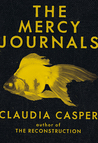
The Mercy JournalsThe Mercy Journals by Claudia Casper
My rating: 5 of 5 stars

Four and a half stars

The book opens with a brief explanatory prologue: In 2072, these journals have been found next to the human remains of an adult male, a pistol and a cougar. The journals begin in the year 2047, after a third of humanity has died off due to war, ecological collapse and a flu pandemic. There’s a new world order where the state has much more control of its citizens, doling out rations for food, power and data. The younger generation find that they like this socialist lifestyle and are angered by those who still insist on being wasteful and greedy, while a murky resistance group criticizes the state.

Our hero and writer of the journals is Allen Quincy, a war veteran who is almost permanently holed up in his apartment fighting PTSD. He comes back to life when he meets the singer and dancer, Ruby. They quickly become lovers. She, herself, is dealing with the damage from the past; her performances are an exorcism of that time because she is “afraid we’ll stop the process of destroying and tearing down too soon. We need to keep going if we’re going to break through to something truly different” (99).

Quincy began to write these journals in his own attempt at obliteration. He reads a quote from Socrates that “[w]riting destroys memory” (17) and so he describes his world in an attempt to rid himself of his taunting PTSD visions. These visions stem from a calamitous army tour defending the border after Mexico ran out of water. From his time there, he earned the nickname, Mercy.

The book is made up of two parts: Journal One is a meditation on writing and memory. When recording the first time he met Ruby, Quincy realizes that his writing may be “accurate but [he still] left so much out. The part is made to stand for the whole, and then the part becomes the whole” (151).

In Journal Two, the book becomes a thriller. I found that answers to questions about characters are left implied, so that you can let your imagination get away with itself. The re-entry of Quincy’s brother Leo into the story creates a tension; Leo’s actions are underscored by incredible malice. Language becomes a slippery thing. Where once Quincy wrote to forget, around Leo he is hesitant to ask questions because “asking was a submissive act; it left you waiting for an answer, vulnerable to a lie” (222).

Like in Margaret Atwood’s The Handmaid’s Tale, Canada is seen to be some sort of haven: the place Americans escape to. Quincy, Leo and Leo’s stepson, Griffith head up to Vancouver Island where their family had a cottage named Nirvana. The band is mentioned a couple of time, as well as Buddhist philosophy. There’s also the paradigm of Cain and Abel and talk of beginning a “new covenant” (228). Ostensibly, they are there to find Quincy’s lost sons, as Leo has reported that they have been spotted. They go deeper into the forest, and away from what they knew as civilization.

Initially, I found myself comparing The Mercy Journals to Cormac McCarthy’s The Road - sparse writing style, limited punctuation and almost as bleak. There’s also a little bit of Conrad’s Heart of Darkness when journeying up the river and having to deal with Kurtz.

Claudia Casper’s writing and observations are exquisite. The split nature of the novel (part meditation, part thriller) may bother some readers, but the book made me think and kept me wanting to read past my bedtime.

There’s something about dystopian novels that I really like: Station Eleven, Hunger Games. My husband hates them: He says they’re too dark. Maybe I am a pessimist of the highest order. But I find these kinds of books are ultimately about faith in humanity - how low we can go and still survive.

The Mercy Journals is highly recommended.


View all my reviews

Thursday, 28 November 2013

The Painted Girls

The Painted GirlsThe Painted Girls by Cathy Marie Buchanan
My rating: 4 of 5 stars

The Painted Girls is a well-researched piece of historical fiction which asks: What happened to the girl who posed for Edgar Degas’s famous statue, “Little Dancer Aged 14”? There are scant details about Marie van Goethem’s life and those of her two sisters Antoinette and Charlotte. What we do know is that Marie was fired from the Opera’s ballet company for lates and absences and Antoinette was jailed for stealing 700 francs. Then they disappear into history. Their sister Charlotte, we know, became an accomplished ballerina.

Buchanan weaves these scant facts with further research on Paris of the Belle Epoque, and imagination. The narration alternates between the voices of Marie and Antoinette. By divvying up the narration, Buchanan shows how few choices lower class women had in late 19th century Paris. After awhile, I wondered, what the story would have been like without the clockwork alternation between the two sisters.


During this period of time, scientists tried to prove that character could literally be read on the faces of people, with studies showing that certain facial characteristics demonstrated “innate criminality”(304). In the end, I questioned how Degas really felt about Marie. In the novel, he was only interested in her at the point between being a girl and becoming a woman. In reality, he stopped painting her, but we don’t know why. Reviews of her statuette comment on her ugliness and how the artwork “imprints her face with detestable promise of every vice” (316). Both Marie and Antoinette are certainly at the mercy of unscrupulous men. There are very few good men in the book, in fact.

The ending of the novel, however, demonstrates the love and tenderness the author feels for her subjects. In truth, I wonder, how often such an ending happened for real people. Perhaps.

The Painted Girls is an illuminating read about this certain time and place and I enjoyed learning more about that era. I also liked reading Cathy Marie Buchanan’s website and comparing Degas’s work to her fictional characters. A great cross-pollination of media.

http://www.cathymariebuchanan.com/boo...

Other reviews:

http://www.theglobeandmail.com/arts/b...

http://www.quillandquire.com/reviews/...

http://www.thestar.com/entertainment/...


Essays on historical fiction:

http://www.newyorker.com/reporting/20...

http://ihrconference.wordpress.com/20...


View all my reviews

Image credit:
AgnosticPreachersKid. Degas. 25 Feb. 2011. Wikimedia Commons. 20 Oct. 2014. Web. 15 Sept. 2016.

Monday, 4 November 2013

The Secret of the Blue Trunk

The Secret of the Blue TrunkThe Secret of the Blue Trunk by Lise Dion
My rating: 4 of 5 stars

Imagine your parent leaving you the key to a blue trunk that was always kept locked. What life did your parent have before you were born? What secrets does the blue trunk hold?

Emotional and riveting. A daughter learns more about who her mother really was and what she had to endure.

Some violence and sexual allusions, but suitable for teens.

View all my reviews

Saturday, 2 November 2013

Projection: Encounters with My Runaway Mother

Projection: Encounters with My Runaway MotherProjection: Encounters with My Runaway Mother by Priscila Uppal
My rating: 5 of 5 stars

While I was reading Projection, I thought about a course I took long ago. Some of the texts dealt with “mother-want”. At the time, we read these books as feminist texts where a woman who grows up without a mother has a better chance of becoming an independent, successful artist because without a mother there is no one there to teach her how to conform to a woman’s role.

Priscila Uppal has indeed grown up into a strong, independent artist after being abandoned by her mother when Priscila was eight years old. Despite the promises of feminist analysis, Uppal shows that “Motherlessness in my situation was far too closely equated with lovelessness.”

Projection made me think about the books I had read twenty years ago in a new light:

• “When mothers fail us, can we be ourselves?” -Aurora Leigh by Elizabeth Barrett Browning
• “Oh mama, why’d you put this hole in me?” -Heroine by Gail Scott

Priscila Uppal’s book is an angry look at the mother who betrayed her. She cannot discover what would have happened if her mother had stayed—you cannot go back and change the past. Instead, Uppal asks: “What does it mean to have a mother? Is it the necessary condition of humanity?”

The pain is carefully crafted by pairing each chapter with a movie that illuminates the conflict between this mother and daughter. Ultimately, Projection is an unapologetic personal examination of art, belonging, memory and home.

Interview with Priscila Uppal on 49th Shelf: http://49thshelf.com/Blog/2013/10/09/Priscila-Uppal-How-to-Mourn-the-Living

View all my reviews

Tuesday, 22 October 2013

How the Light Gets In

How the Light Gets In (Chief Inspector Armand Gamache, #9)How the Light Gets In by Louise Penny
My rating: 5 of 5 stars

Louise Penny's best. A newcomer should read some of her previous Gamache novels in order to understand the backstory. I started with Bury Your Dead and managed. I love how both Bury Your Dead and How the Light Gets In celebrate Quebec winter. Louise Penny amazingly incorporates Quebec past and present into the plot of two intertwining, tension-filled crimes.
Amazing.


View all my reviews

Sunday, 20 October 2013

Alice Munro Country

Travels through Munro Country: Bayfield, Wingham, Port Albert and Goderich. Inspired by "Where Alice Munro found her Stories".


Ceiling ornament


Shipwreck Chart of the Great Lakes


Sunday, 29 September 2013

Neuromancer

Neuromancer (Sprawl, #1)Neuromancer by William Gibson
My rating: 5 of 5 stars

"The globalization of technology, therefore, as Gibson dramatizes, will increasingly deprive humanity of its spiritual dimension..."

"In 'Gibson's world, human beings have nothing left but thrill' (191). The characters in the novel get thrilled through the nonphysical embodiment of cyberspace or intense sensual experience, but although thrill may replace reflection, Case and others find that it liberates them from the oppression of everyday concerns."

How do you envision the future? Does technology create a dystopian existence


or utopian world?


For further exploration of this dichotomy, consider taking this MOOC: https://www.coursera.org/course/edc)

William Gibson's imaginary future is not a sunny, happy place, but one in which humans continue to live and struggle. (To think more deeply about Neuromancer, I've been reading essays about it. Great to model this kind of reading for students, btw. Literary essays are supposed to help you discover more about a work of literature, not just help you finish your homework.)

Neuromancer is a book of ideas. The detachment of the characters from their own humanity may also place readers of the novel at arm's length. Many other reviews on Goodreads call for a re-reading of the book in order to get a fuller appreciation of what it is trying to say. The reason that I give this book five stars is that I will be thinking about it for a long time.

Neuromancer is an excellent resource to use with students to talk about how their world is changing: Do we shape technology, or does technology shape us? That is the question. Think Raymond Williams vs Marshall McLuhan. More recent texts include the graphic novel The Influencing Machine by Brooke Gladstone, Stratosphere by Michael Fullan (the use of technology in education) and The Shallows by Nicholas Carr.


Quotes from:
Haney, William S., II. "William Gibson's Neuromancer: cyberpunk and the end of humanity/William Gibson'in Neuromancer Adli Eseri: siberpunk ve insanligin sonu." Interactions 18.1 (2009): 73+. Canada In Context. Web. 27 Sept. 2013.


View all my reviews

Wednesday, 17 July 2013

Lakeland

Lakeland: Ballad of a Freshwater CountryLakeland: Ballad of a Freshwater Country by Allan Casey
My rating: 3 of 5 stars

Did you know that:

*Canada has more than three million lakes?

*60% of world's lakes are found in Canada?

Informative, yet romantic, Lakeland paddles through the meaning of lakes in Canada, to Canadians. It's not surprising that this book won the GG. Beautiful images such as "the wavering green minnows moving into the shade under a boat dock like suspended jade pieces" (2), help evoke the lake as "nature's most beautiful landscape feature" (10). Yes, that's from Thoreau.

The book journeys throughout Canada and contemplates the environmental damage that we are doing to our lakelands. For me, the book really shines when Allan Casey focuses on the personal and his experiences on Emma Lake.

A suitable read for intelligent cottage reading.

View all my reviews


Monday, 17 June 2013

Lost Cause

Lost Cause (Seven, #2)Lost Cause by John Wilson
My rating: 4 of 5 stars

Love the concept of this series. A grandfather leaves his seven grandsons specific tasks and adventures in his will.

LOST CAUSE concerns Steve discovering his grandfather's involvement in the Spanish Civil War. The book does a great job at weaving in historical facts and ambiguities. I would say that is a good choice for a reluctant readers, except that sometimes I found the writing a bit patronizing.

The series could be used for literature circles, as well as research on the contexts and locals of each novel.

View all my reviews

Wednesday, 12 June 2013

The Rehearsal

The RehearsalThe Rehearsal by Eleanor Catton
My rating: 5 of 5 stars

“All the world’s a stage,
And all the men and women are merely players;”

So it seems in Eleanor Catton’s dazzling debut novel, The Rehearsal. “What am I?” one of the characters asks. The question of identity is explored in the intersecting plotlines involving a high school sex scandal, an acting institute, a burgeoning lesbian relationship, and lost love. It would be interesting to teach this book to girls in high school, especially since an all-girls’ academy is the primary setting. The desire to protect teens may not be the best thing for them. As the saxophone teachers says wearily to one of her student’s mothers:

[R]emember that these years of your daughter’s life are only the rehearsal for everything that comes after. Remember that it’s in her best interests for everything to go wrong. It’s in her best interests to slip up now, while she’s still safe in the Green Room...Don’t wait until she’s out in the savage white light of the floods, where everyone can see.


Catton’s novel is tightly written and keenly observant. She describes one student, a loner, as being “too bright for the slutty girls and two savage for the bright girls, haunting the edges and corners of the school like a sullen, disillusioned ghost and pursued by frightened vicious rumours that she is possibly probably gay.”

The structure is fantastic and experimental, just like a good teenage-hood should be.


View all my reviews

Wednesday, 15 May 2013

Finding Karla

Finding Karla: How I Tracked Down an Elusive Serial Child Killer and Discovered a Mother of ThreeFinding Karla: How I Tracked Down an Elusive Serial Child Killer and Discovered a Mother of Three by Paula Todd
My rating: 2 of 5 stars

The title sums up the booklet. You won't find any new revelations about Homolka; instead, it is remarkable that Paula Todd found her using sparse facts and by following rumours on the Internet.

Is it a worthwhile read? The text is short & it isn't expensive. Although, I don't want to dwell on her life, upon some reflection, the booklet does answer the question: How does Karla now live?

View all my reviews

Wednesday, 17 April 2013

The Accident

The AccidentThe Accident by Linwood Barclay
My rating: 2 of 5 stars

Fresh off of reading a Louise Penny mystery, The Accident is a bit of a shock. Gone are the gentle characters who all want to help solve the crime. Instead, most of the characters can be considered the "bad guys". Short chapters help make this twisting story a quick read. Gaps in logic bothered me.

View all my reviews

Saturday, 13 April 2013

The Beautiful Mystery

The Beautiful Mystery (Chief Inspector Armand Gamache, #8)The Beautiful Mystery by Louise Penny
My rating: 4 of 5 stars

A monk is found murdered in a secret garden of a secluded abbey. Throw in the history of Gregorian chants, memories of the Inquisition, an association with Thomas a Becket, a hidden treasure and a Native legend, and you have the ingredients for this story.

What I love most about Louise Penny's Inspector Gamanche novels is how she interweaves an aspect of fascinating history into the modern-day plot line. We learn about the mythological Gilbertine monks and the pursuit of God-seeking music, as well as drug addiction.

There's a gentleness to Louise Penny's crime stories. There's not a psychopathic thug lurking in every corner and shadow. In fact, in all of her Gamanche novels, the suspects help to solve the crime. Her stories are about ordinary people who are suddenly overcome with passion and kill, then slink back into everyday life.

Since this book is part of a series, there is also a continuing story-line from previous novels. I do want to find out how this wider story arc will play out. At this point, if a reader were interested in starting to read Louise Penny, I would recommend starting with an earlier book, such as Bury Your Dead, to fill in the back story.

View all my reviews

Wikipedia articles on Gregorian chants, and the Gilbertine order.

Monday, 18 March 2013

A Trick of the Light

A Trick of the Light (Chief Inspector Armand Gamache, #7)A Trick of the Light by Louise Penny
My rating: 5 of 5 stars

Four and a half stars.

Featuring a murder in the art world, the story is complex and explores human frailties via the narrative of a murder mystery. Can people really change? How much should we hope? Should we always forgive?

The novel interweaves story-lines from earlier books in the series, but it does explain what has happened in previous episodes, so a reader will not be disadvantaged if he or she is starting with A Trick of the Light. These story-lines help flesh out the main characters of Chief Inspector Armand Gamache and his second-in-command, Jean-Guy Beauvoir. I'm hoping subsequent books will tell us more about Inspector Isabelle Lacoste.

My reading of this book never slowed down for a minute. A Trick of the Light is a well crafted work. My only complaint is that while everyone is suspect, a major clue is kept from the reader to prevent him or her from correctly guessing whodunit.

http://www.theglobeandmail.com/arts/books-and-media/a-trick-of-the-light-by-louise-penny/article600845/

http://articles.washingtonpost.com/2011-09-04/entertainment/35274901_1_cozy-mystery-dead-woman-novels


View all my reviews

Saturday, 16 February 2013

The Emperor of Paris

The Emperor of ParisThe Emperor of Paris by C.S. Richardson
My rating: 5 of 5 stars

Brilliant, original storytelling. At first, I thought this book would be a Michael Ondaatje knock off, but I was wrong. The story is more rooted than an Ondaatje adventure; the mosaic plotting keeps us in suspense. Love, art, imagination, books, and an ending that is really the beginning.

OK, I'm being a bit vague. Here are three local reviews of the novel:

http://www.quillandquire.com/reviews/...

http://arts.nationalpost.com/2012/08/...

http://www.theglobeandmail.com/arts/b...

Also, a link to a CBC podcast of C.S. Richardson's love letter to Paris: http://www.cbc.ca/books/2012/09/cs-richardsons-love-letter-to-paris.html

Lastly, a video of Paris during the time of the novel (1900-1930):


View all my reviews

Tuesday, 29 January 2013

The Blondes by Emily Schultz

The BlondesThe Blondes by Emily Schultz
My rating: 3 of 5 stars

A story where women, particularly blonde women, have become the deliverers of death. The cover of the book is gorgeous and there are some particularly piercing observations and descriptions of New York: "There's the black corsetry of fire escapes, a symphony of car honks, and the way all the florists and corner stores arrange their carnations and lilies on pedestals with bows, as if any given weekday is as important as prom night" (24).

Still, I wanted the story to be elevated to another level. Really it's a social commentary with a small thriller element. The lives of the people in the novel still remain relatively normal. That is, society does not collapse around them: There are still people going to work, eating in restaurants, travelling, as well as playing chess in the park: "[We] fell back into our routine of breakfast, dishes, bathing, waxing, and shaving" (351). What the characters are doing is removing blonde hair, but the same habits could be said for women everywhere.

The biggest source of tension is what will happen to Hazel's unborn baby.

As I read, I kept wondering how it would all end. The ending is satisfying and affirming.

Fave quotes from book:

01/28page 293
75.0%"I don't believe there is a bond between all women. I don't believe that sisterhood is powerful. I believe just the opposite. I believe that these women were simply in the right circumstances to be kind. There was nothing preventing them from it."
01/27page 176
45.0%""This hair-borne illness...has been sent from God. That's right, send from God as a punishment for vanity. A punishment for promiscuity! A punishment for those who worship false dieties! A punishment for pride!""
01/24page 79
20.0%""Beautiful women...are full of anger over their privilege. They use deceit as a kind of trade. They receive more attention than other women, and want to be the centre of attention at all times. It's an addiction. And like all addicts, they're controlling and abusive, full of insecurity and rage.""
01/21page 24
6.0%"There's the black corsetry of fire escapes, a symphony of car honks, and the way all the florists and corner stores arrange their carnations and lilies on pedestals with bows, as if any given weekday is as important as prom night."


View all my reviews

Read more about the author, Emily Schultz.

Review from the National Post.

Video interviews about The Blondes:


Wednesday, 28 November 2012

Ru

RuRu by Kim Thúy
My rating: 5 of 5 stars

An arrangement of poetic vignettes. On the surface, Ru explores family, war, living as a refugee and integration into a new country. Underneath, Thuy ruminates on culture, conflict, language, love and memory. There’s a whole lot going on in this slender, beautiful novel.

What do you take with you when you flee your homeland? It is not what you think.


View all my reviews