Showing posts with label Dystopia. Show all posts

Sunday, 11 February 2018

The Power

The PowerThe Power by Naomi Alderman
My rating: 4 of 5 stars

3.5 stars

I remember when I was in university and how we said that if the world were ruled by women, it'd be a much kinder, gentler place.

The Power demonstrates that old adage about how "absolute power corrupts absolutely". The books is immensely readable, but I wanted more of a transformation in the society that was created. Or some sort of realization in the epilogue that is more than just a sly wink (albeit entertaining) between the author and reader.

The book has got a lot of buzz, and provides a good amount of fodder for discussion. A warning for some readers: There are depictions of violence, and two rape scenes.

View all my reviews

Monday, 3 October 2016

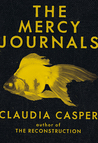
Between Buddha and the Bible: The Mercy Journals

The Mercy JournalsThe Mercy Journals by Claudia Casper
My rating: 5 of 5 stars

Four and a half stars

The book opens with a brief explanatory prologue: In 2072, these journals have been found next to the human remains of an adult male, a pistol and a cougar. The journals begin in the year 2047, after a third of humanity has died off due to war, ecological collapse and a flu pandemic. There’s a new world order where the state has much more control of its citizens, doling out rations for food, power and data. The younger generation find that they like this socialist lifestyle and are angered by those who still insist on being wasteful and greedy, while a murky resistance group criticizes the state.

Our hero and writer of the journals is Allen Quincy, a war veteran who is almost permanently holed up in his apartment fighting PTSD. He comes back to life when he meets the singer and dancer, Ruby. They quickly become lovers. She, herself, is dealing with the damage from the past; her performances are an exorcism of that time because she is “afraid we’ll stop the process of destroying and tearing down too soon. We need to keep going if we’re going to break through to something truly different” (99).

Quincy began to write these journals in his own attempt at obliteration. He reads a quote from Socrates that “[w]riting destroys memory” (17) and so he describes his world in an attempt to rid himself of his taunting PTSD visions. These visions stem from a calamitous army tour defending the border after Mexico ran out of water. From his time there, he earned the nickname, Mercy.

The book is made up of two parts: Journal One is a meditation on writing and memory. When recording the first time he met Ruby, Quincy realizes that his writing may be “accurate but [he still] left so much out. The part is made to stand for the whole, and then the part becomes the whole” (151).

In Journal Two, the book becomes a thriller. I found that answers to questions about characters are left implied, so that you can let your imagination get away with itself. The re-entry of Quincy’s brother Leo into the story creates a tension; Leo’s actions are underscored by incredible malice. Language becomes a slippery thing. Where once Quincy wrote to forget, around Leo he is hesitant to ask questions because “asking was a submissive act; it left you waiting for an answer, vulnerable to a lie” (222).

Like in Margaret Atwood’s The Handmaid’s Tale, Canada is seen to be some sort of haven: the place Americans escape to. Quincy, Leo and Leo’s stepson, Griffith head up to Vancouver Island where their family had a cottage named Nirvana. The band is mentioned a couple of time, as well as Buddhist philosophy. There’s also the paradigm of Cain and Abel and talk of beginning a “new covenant” (228). Ostensibly, they are there to find Quincy’s lost sons, as Leo has reported that they have been spotted. They go deeper into the forest, and away from what they knew as civilization.

Initially, I found myself comparing The Mercy Journals to Cormac McCarthy’s The Road - sparse writing style, limited punctuation and almost as bleak. There’s also a little bit of Conrad’s Heart of Darkness when journeying up the river and having to deal with Kurtz.

Claudia Casper’s writing and observations are exquisite. The split nature of the novel (part meditation, part thriller) may bother some readers, but the book made me think and kept me wanting to read past my bedtime.

There’s something about dystopian novels that I really like: Station Eleven, Hunger Games. My husband hates them: He says they’re too dark. Maybe I am a pessimist of the highest order. But I find these kinds of books are ultimately about faith in humanity - how low we can go and still survive.

The Mercy Journals is highly recommended.


View all my reviews

Wednesday, 2 October 2013

The Ocean at the End of the Lane

The Ocean at the End of the LaneThe Ocean at the End of the Lane by Neil Gaiman
My rating: 5 of 5 stars

Magical.

Childhood fears, memories, and the belief in another hidden world. A backwards glance at one's past. The power of story. A good antidote to my last futuristic read, Neuromancer, where the spiritual side of humanity is lost.

View all my reviews

Sunday, 29 September 2013

Neuromancer

Neuromancer (Sprawl, #1)Neuromancer by William Gibson
My rating: 5 of 5 stars

"The globalization of technology, therefore, as Gibson dramatizes, will increasingly deprive humanity of its spiritual dimension..."

"In 'Gibson's world, human beings have nothing left but thrill' (191). The characters in the novel get thrilled through the nonphysical embodiment of cyberspace or intense sensual experience, but although thrill may replace reflection, Case and others find that it liberates them from the oppression of everyday concerns."

How do you envision the future? Does technology create a dystopian existence


or utopian world?


For further exploration of this dichotomy, consider taking this MOOC: https://www.coursera.org/course/edc)

William Gibson's imaginary future is not a sunny, happy place, but one in which humans continue to live and struggle. (To think more deeply about Neuromancer, I've been reading essays about it. Great to model this kind of reading for students, btw. Literary essays are supposed to help you discover more about a work of literature, not just help you finish your homework.)

Neuromancer is a book of ideas. The detachment of the characters from their own humanity may also place readers of the novel at arm's length. Many other reviews on Goodreads call for a re-reading of the book in order to get a fuller appreciation of what it is trying to say. The reason that I give this book five stars is that I will be thinking about it for a long time.

Neuromancer is an excellent resource to use with students to talk about how their world is changing: Do we shape technology, or does technology shape us? That is the question. Think Raymond Williams vs Marshall McLuhan. More recent texts include the graphic novel The Influencing Machine by Brooke Gladstone, Stratosphere by Michael Fullan (the use of technology in education) and The Shallows by Nicholas Carr.


Quotes from:
Haney, William S., II. "William Gibson's Neuromancer: cyberpunk and the end of humanity/William Gibson'in Neuromancer Adli Eseri: siberpunk ve insanligin sonu." Interactions 18.1 (2009): 73+. Canada In Context. Web. 27 Sept. 2013.


View all my reviews

Tuesday, 13 August 2013

Marvel 1602

Marvel 1602Marvel 1602 by Neil Gaiman
My rating: 5 of 5 stars

Bloody brilliant.

Placing Marvel characters such as Spider-Man, the X-Men, the Fantastic Four and Daredevil at the time of Elizabeth I demonstrates how universal and enduring comic themes are.

The graphic novel could be purchased by schools for pleasure reading, but also to look at character archetypes, dramatic narrative, historical research, and how to visualize a story.

"So what are these fundamental principles...?"

"Stories. And they give me hope.

"We are a boatful of monsters and miracles, hoping that, somehow, we can survive a world in which all hands are against us. A world which, by all evidence, will end extremely soon.

"Yet I posit we are in a universe which favours stories.

"A universe in which no story can ever truly end; in which there can be only continuances."


For more see: http://en.wikipedia.org/wiki/Marvel_1602

View all my reviews


Tuesday, 29 January 2013

The Blondes by Emily Schultz

The BlondesThe Blondes by Emily Schultz
My rating: 3 of 5 stars

A story where women, particularly blonde women, have become the deliverers of death. The cover of the book is gorgeous and there are some particularly piercing observations and descriptions of New York: "There's the black corsetry of fire escapes, a symphony of car honks, and the way all the florists and corner stores arrange their carnations and lilies on pedestals with bows, as if any given weekday is as important as prom night" (24).

Still, I wanted the story to be elevated to another level. Really it's a social commentary with a small thriller element. The lives of the people in the novel still remain relatively normal. That is, society does not collapse around them: There are still people going to work, eating in restaurants, travelling, as well as playing chess in the park: "[We] fell back into our routine of breakfast, dishes, bathing, waxing, and shaving" (351). What the characters are doing is removing blonde hair, but the same habits could be said for women everywhere.

The biggest source of tension is what will happen to Hazel's unborn baby.

As I read, I kept wondering how it would all end. The ending is satisfying and affirming.

Fave quotes from book:

01/28page 293
75.0%"I don't believe there is a bond between all women. I don't believe that sisterhood is powerful. I believe just the opposite. I believe that these women were simply in the right circumstances to be kind. There was nothing preventing them from it."
01/27page 176
45.0%""This hair-borne illness...has been sent from God. That's right, send from God as a punishment for vanity. A punishment for promiscuity! A punishment for those who worship false dieties! A punishment for pride!""
01/24page 79
20.0%""Beautiful women...are full of anger over their privilege. They use deceit as a kind of trade. They receive more attention than other women, and want to be the centre of attention at all times. It's an addiction. And like all addicts, they're controlling and abusive, full of insecurity and rage.""
01/21page 24
6.0%"There's the black corsetry of fire escapes, a symphony of car honks, and the way all the florists and corner stores arrange their carnations and lilies on pedestals with bows, as if any given weekday is as important as prom night."


View all my reviews

Read more about the author, Emily Schultz.

Review from the National Post.

Video interviews about The Blondes:


Wednesday, 31 October 2012

Blood Red Road

Blood Red Road (Dust Lands, #1)Blood Red Road by Moira Young
My rating: 5 of 5 stars

I thoroughly enjoyed reading Blood Red Road. Once you get the post-apocalyptic dialect in your ear and fight your way through some of the silly romantic bickering, you’ll enjoy a book that’s a mixture of Mad Max, Indiana Jones, Hunger Games, Divergent and Cormac McCarthy.

What’s not to love? There’s a feisty female protagonist, a group of warrior girls who call themselves The Free Hawks and a handsome rogue that drives the heroine wild.

Female readers who are into YA dystopian novels will love it (and possibly be tolerant of the bickering). They may even debate if they are on Team Tobias or Team Jack.


View all my reviews