Showing posts with label Art. Show all posts

Sunday, 17 June 2018

Banksy or Home as a Shark

Just a rumination about what’s going on in the world. The news this morning started with the plight of asylum seekers, reminding me of the poem, “Home” by Warsan Shire. Powerful. Read it.

Which led me to think about a stencil I saw in a park recently.


Sunday, 11 February 2018

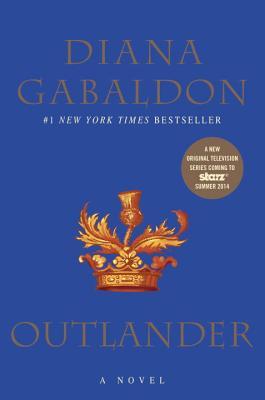
Top 20 Books I Read in 2017

My friend Natalie asked me to create a top ten list of the books I read in 2017. Of course, I have more than ten. So to celebrate this plethora of riches, I present to you my favourite reads of 2017.

Historical Fiction


Very different books. Both set in Scotland. There may be a few more Scottish titles on this list. I've been hypnotized by the Edinburgh Book Festival.

I had intended to add book covers and links to all of the books below. But then I'll never get this posted and it's already February. Here goes!

Young Adult

Rodent by Lisa J. Lawrence
Fifteen Lanes by S.J. Laidlaw

Both titles were nominated for the White Pine 2017 awards. Please keep in mind that I'm only listing books which I actually read in 2017. There are a couple of other White Pine 2017 titles that I loved, but I read them in 2016.

Education
Launch: Using Design Thinking to Boost Creativity and Bring Out the Maker in Every Student by John Spencer

Enjoyed meeting up with my Tweeps old and new in the #LaunchBookChat this year!

International
Exit West by Mohsin Hamid
Goblin by Ever Dundas

Essays
Nasty Women by 404 Ink
One Day We'll All Be Dead and None of This Will Matter by Scaachi Koul

Nasty Women led the revolution in the year of the great shake up of #MeToo #BlackLivesMatter and #OscarsSoWhite.

Scaachi Koul's acerbic essays hit the funny bone. Clever book jacket design, too.

Non-Fiction
Sapiens: A Brief History of Humankind by Yuval Noah Harari
Mind blown
The Fact of a Body by Alexandria Marzano-Lesnevich
Finely peeling away the layers of secrets
The Vanishing Man: In Pursuit of Valazquez by Laura Cumming
Winner of the 2017 James Tait Black Prize for NonFiction, a stunning tale of how art can consume us.

Picture Books
The Tale of Tam Linn by Lari Don
Scottish fairytale. A favourite of my niece's.
Journey by Aaron Becker
Only illustrations. Beautiful ones, at that. Great way for pre-literate or early literate children to tell stories.

Literary Fiction
What Belongs to You by Garth Greenwell
Nominated for the 2017 James Tait Black Prize for Fiction
The Last Neanderthal by Claire Cameron
Made me mourn for the extinction of the neanderthal. I want a lip like Girl's. Nominated for the 2017 Rogers Writers’ Trust Fiction Prize.

Mystery
All the Devils by Neil Broadfoot
Broadfoot's writing keeps getting better. Novel is set in Edinburgh. Scotland, yet again!
Glass Houses by Louise Penny
A perennial favourite - it's a good thing that Penny tends to publish a book a year!

Fantasy
A Darker Shade of Magic by V.E. Schwab
This book was partly written in Edinburgh. And it shows.

Short Stories
The 2017 Short Story Advent Calendar by Hingston & Olsen Publishing
Forget about the chocolate - open a new short story every morning leading up to Christmas. Great being introduced to new writers and chatting with other readers about the tales on Twitter. #ssac2017

Poetry
I tend to read bit and bites of poetry, but what got me hooked on poetry this year like never before was the FutureLearn course, "Literature and Mental Health". Highly recommended.

Other Recommendations
This list from Kirsty Logan who read 220 books. Quite a diverse range of books that puts my list to shame. Enjoy!
http://www.kirstylogan.com/best-books-of-2017/


Wednesday, 3 January 2018

Autumn by Ali Smith

AutumnAutumn by Ali Smith
My rating: 5 of 5 stars  View all my reviews
Read Autumn the way you would a collage painting: What’s the big picture? What’s in the details? How does the story all hang together, and what do we imagine happens next? Autumn is a painting made up of words, as Daniel shows Elisabeth when he asks her to close her eyes and imagine as he describes a collage by Pauline Boty. Elisabeth is able to recognize the painting when she actually sees it.

Sixties icons play a central role in the novel: Pauline Boty, as well as Christine Keeler (who was the subject of one of Boty’s paintings), serve as totems for us to examine our present time. In an article by Ali Smith herself, she describes the work of Pauline Boty as dropping “us head-first into a dream, and when the dream turns into a nightmare she slaps it in the face, wakes up into what’s now a multilayered narrative of dreamworld and mundanity” [1]. Quite often in the book, when things seem to be quite grim for Elisabeth (and the world), Daniel shows how art can lift you out of the darkness.

Ali Smith, writer, signing books at the Edinburgh International Book Festival. By Tim Duncan. From Wikimedia Commons.


Christine Keeler’s role seems to guide us to the question, “What happens culturally when something is built on a lie?” [2]. The fallout from Brexit is definitely in the book, from the comically absurd task of applying for a passport, the fences around common land, and the spray painting of “GO HOME” on people’s houses. Ali Smith uses fiction and painting to remind us “to read the world as a construct. And if you can read the world as a construct, you can ask questions of the construct and you can suggest ways to change the construct. You understand that things aren’t fixed” [2].

Initially, I thought about giving the book a four star rating because of its lack of resolution. But you have to stare at the novel, dissect it, make connections,  and do research. By God, did Smith do a lot of research - which is not immediately apparent, especially considering the speed with which this book was written and published: “Maybe an accelerated news cycle requires accelerated art” [2].

We live in the era that comes after Rule Britannia (political empire) and Cool Britannia (the resurgence of the cultural empire). Does Europe and the rest of the world ask what happens Post-Britannia? What has the empire stood for, for us? Smith looks to the art of Pauline Boty and her final testament: A “message of undying hope, of solidarity with the oppressed, and of certainty about the future that gave all us us more than courage. Determination” [1].

Works considered while writing this wee review:
[1] Ali Smith on the prime of pop artist Pauline Boty

Sunday, 26 November 2017

Enter the Darkness

As we head into darker days and longer nights, we celebrate what scares us. Perhaps, in our fear, we will cling to each other to keep safe until the daylight comes. Or perhaps the darkness will follow us - as Del Toro wishes - home.

Here are three of my favourite spooky things from this year:
  1. "Time Warp Saloon" from Epidsode 2 Lost in Time https://spookedpodcast.org/
  2. The Ghost Box from Hingston & Olsen https://www.hingstonandolsen.com/store/the-ghost-box
  3. The AGO's Guillermo Del Toro Exhibit: At Home with Monsters https://ago.ca/exhibitions/guillermo-del-toro


Monday, 26 January 2015

As Good as It Gets

Why travel?


Picture taken at the AGO's Alex Colville exhibition December 30, 2014.

The Art of Fiction

Years ago in a writing workshop, our instructor said: "Fiction is a lie that tells the truth." 


How often do we create mythologies about our own lives?

Picture taken at the AGO in the gift shop of the Alex Colville exhibition, December 30, 2014.

Thursday, 28 November 2013

The Painted Girls

The Painted GirlsThe Painted Girls by Cathy Marie Buchanan
My rating: 4 of 5 stars

The Painted Girls is a well-researched piece of historical fiction which asks: What happened to the girl who posed for Edgar Degas’s famous statue, “Little Dancer Aged 14”? There are scant details about Marie van Goethem’s life and those of her two sisters Antoinette and Charlotte. What we do know is that Marie was fired from the Opera’s ballet company for lates and absences and Antoinette was jailed for stealing 700 francs. Then they disappear into history. Their sister Charlotte, we know, became an accomplished ballerina.

Buchanan weaves these scant facts with further research on Paris of the Belle Epoque, and imagination. The narration alternates between the voices of Marie and Antoinette. By divvying up the narration, Buchanan shows how few choices lower class women had in late 19th century Paris. After awhile, I wondered, what the story would have been like without the clockwork alternation between the two sisters.


During this period of time, scientists tried to prove that character could literally be read on the faces of people, with studies showing that certain facial characteristics demonstrated “innate criminality”(304). In the end, I questioned how Degas really felt about Marie. In the novel, he was only interested in her at the point between being a girl and becoming a woman. In reality, he stopped painting her, but we don’t know why. Reviews of her statuette comment on her ugliness and how the artwork “imprints her face with detestable promise of every vice” (316). Both Marie and Antoinette are certainly at the mercy of unscrupulous men. There are very few good men in the book, in fact.

The ending of the novel, however, demonstrates the love and tenderness the author feels for her subjects. In truth, I wonder, how often such an ending happened for real people. Perhaps.

The Painted Girls is an illuminating read about this certain time and place and I enjoyed learning more about that era. I also liked reading Cathy Marie Buchanan’s website and comparing Degas’s work to her fictional characters. A great cross-pollination of media.

http://www.cathymariebuchanan.com/boo...

Other reviews:

http://www.theglobeandmail.com/arts/b...

http://www.quillandquire.com/reviews/...

http://www.thestar.com/entertainment/...


Essays on historical fiction:

http://www.newyorker.com/reporting/20...

http://ihrconference.wordpress.com/20...


View all my reviews

Image credit:
AgnosticPreachersKid. Degas. 25 Feb. 2011. Wikimedia Commons. 20 Oct. 2014. Web. 15 Sept. 2016.

Wednesday, 10 July 2013

The Rock Star of MoMA

Is it weird that people are no longer looking at art? Instead, they are documenting themselves posing with the art object. Paintings have become famous, celebrities. We desire to be seen with them.