Showing posts with label NonFiction. Show all posts

Sunday, 11 February 2018

Top 20 Books I Read in 2017

My friend Natalie asked me to create a top ten list of the books I read in 2017. Of course, I have more than ten. So to celebrate this plethora of riches, I present to you my favourite reads of 2017.

Historical Fiction


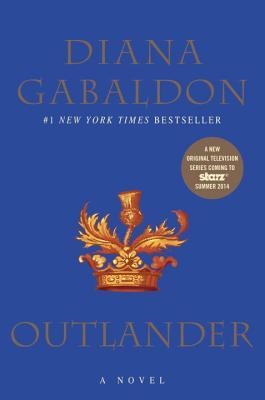
Very different books. Both set in Scotland. There may be a few more Scottish titles on this list. I've been hypnotized by the Edinburgh Book Festival.

I had intended to add book covers and links to all of the books below. But then I'll never get this posted and it's already February. Here goes!

Young Adult

Rodent by Lisa J. Lawrence
Fifteen Lanes by S.J. Laidlaw

Both titles were nominated for the White Pine 2017 awards. Please keep in mind that I'm only listing books which I actually read in 2017. There are a couple of other White Pine 2017 titles that I loved, but I read them in 2016.

Education
Launch: Using Design Thinking to Boost Creativity and Bring Out the Maker in Every Student by John Spencer

Enjoyed meeting up with my Tweeps old and new in the #LaunchBookChat this year!

International
Exit West by Mohsin Hamid
Goblin by Ever Dundas

Essays
Nasty Women by 404 Ink
One Day We'll All Be Dead and None of This Will Matter by Scaachi Koul

Nasty Women led the revolution in the year of the great shake up of #MeToo #BlackLivesMatter and #OscarsSoWhite.

Scaachi Koul's acerbic essays hit the funny bone. Clever book jacket design, too.

Non-Fiction
Sapiens: A Brief History of Humankind by Yuval Noah Harari
Mind blown
The Fact of a Body by Alexandria Marzano-Lesnevich
Finely peeling away the layers of secrets
The Vanishing Man: In Pursuit of Valazquez by Laura Cumming
Winner of the 2017 James Tait Black Prize for NonFiction, a stunning tale of how art can consume us.

Picture Books
The Tale of Tam Linn by Lari Don
Scottish fairytale. A favourite of my niece's.
Journey by Aaron Becker
Only illustrations. Beautiful ones, at that. Great way for pre-literate or early literate children to tell stories.

Literary Fiction
What Belongs to You by Garth Greenwell
Nominated for the 2017 James Tait Black Prize for Fiction
The Last Neanderthal by Claire Cameron
Made me mourn for the extinction of the neanderthal. I want a lip like Girl's. Nominated for the 2017 Rogers Writers’ Trust Fiction Prize.

Mystery
All the Devils by Neil Broadfoot
Broadfoot's writing keeps getting better. Novel is set in Edinburgh. Scotland, yet again!
Glass Houses by Louise Penny
A perennial favourite - it's a good thing that Penny tends to publish a book a year!

Fantasy
A Darker Shade of Magic by V.E. Schwab
This book was partly written in Edinburgh. And it shows.

Short Stories
The 2017 Short Story Advent Calendar by Hingston & Olsen Publishing
Forget about the chocolate - open a new short story every morning leading up to Christmas. Great being introduced to new writers and chatting with other readers about the tales on Twitter. #ssac2017

Poetry
I tend to read bit and bites of poetry, but what got me hooked on poetry this year like never before was the FutureLearn course, "Literature and Mental Health". Highly recommended.

Other Recommendations
This list from Kirsty Logan who read 220 books. Quite a diverse range of books that puts my list to shame. Enjoy!
http://www.kirstylogan.com/best-books-of-2017/


Sunday, 16 October 2016

The Return of History

The Return of History: Conflict, Migration, and Geopolitics in the Twenty-First CenturyThe Return of History: Conflict, Migration, and Geopolitics in the Twenty-First Century by Jennifer Welsh
My rating: 5 of 5 stars

Four and a half stars

I have to admit, I had some trouble getting into the first two essays, but the book picks up power and speed with the last three: The Return of Mass Flight; The Return of the Cold War; and The Return of Inequality. Jennifer Welsh clearly explains the times we are living in. Scary. The coming American election has become all that more important in my eyes.

Vital reading to fix the cracks in our liberal democracies.

Listen to the Massey Lectures on CBC Radio's Ideas from Mon Oct 31 to Fri Nov 4.

View all my reviews

Tuesday, 30 September 2014

Bad Feminist: Essays

Bad Feminist: EssaysBad Feminist: Essays by Roxane Gay
My rating: 4 of 5 stars

I quickly devoured Bad Feminist. Even though Roxanne Gay cites some academic heavyweights, the text is utterly readable. These essays are more personal and political than theoretical, and my favourite topics include:

• the question of privilege
• race
• gender: featuring Judith Butler & Helene Cixous
• humour
• pop culture: Loved her essay about the Hunger Games, “What We Hunger For”
• fairy tales
• misogyny –topics as diverse as Junot Diaz’s “This is How You Lose Her” and Robin Thicke’s “Blurred Lines”

The book won me over at the beginning. When talking about advising and helping students, Gay reports that the students would “generally say, ‘Don’t tell anyone I came to see you.’ It wasn’t that they were embarrassed to get help, most of the time. They were embarrassed to be seen putting effort into their education, to be seen caring” (9-10). A couple of years ago, we had a documentary filmed at our school called, Colour Me.  It was about race and education. The students reported that doing well in school wasn’t considered the “black” thing to do. Wow. Together with Roxanne Gay’s observations, I am stunned.


Sometimes I was bothered about the "shape" of the essays. In some cases, I anticipated that I was being led somewhere and found myself left hanging at the end of the text. Maybe a re-read is necessary.

Some mature content and language.

View all my reviews

Video credit:
Barsoum, Sherien. "Colour Me Documentary Film Official Trailer."YouTube. YouTube, 13 May 2011. Web. 30 Sept. 2014. <https://www.youtube.com/watch?v=FZzesdSPdeI>.

Monday, 4 November 2013

The Secret of the Blue Trunk

The Secret of the Blue TrunkThe Secret of the Blue Trunk by Lise Dion
My rating: 4 of 5 stars

Imagine your parent leaving you the key to a blue trunk that was always kept locked. What life did your parent have before you were born? What secrets does the blue trunk hold?

Emotional and riveting. A daughter learns more about who her mother really was and what she had to endure.

Some violence and sexual allusions, but suitable for teens.

View all my reviews

Saturday, 2 November 2013

Projection: Encounters with My Runaway Mother

Projection: Encounters with My Runaway MotherProjection: Encounters with My Runaway Mother by Priscila Uppal
My rating: 5 of 5 stars

While I was reading Projection, I thought about a course I took long ago. Some of the texts dealt with “mother-want”. At the time, we read these books as feminist texts where a woman who grows up without a mother has a better chance of becoming an independent, successful artist because without a mother there is no one there to teach her how to conform to a woman’s role.

Priscila Uppal has indeed grown up into a strong, independent artist after being abandoned by her mother when Priscila was eight years old. Despite the promises of feminist analysis, Uppal shows that “Motherlessness in my situation was far too closely equated with lovelessness.”

Projection made me think about the books I had read twenty years ago in a new light:

• “When mothers fail us, can we be ourselves?” -Aurora Leigh by Elizabeth Barrett Browning
• “Oh mama, why’d you put this hole in me?” -Heroine by Gail Scott

Priscila Uppal’s book is an angry look at the mother who betrayed her. She cannot discover what would have happened if her mother had stayed—you cannot go back and change the past. Instead, Uppal asks: “What does it mean to have a mother? Is it the necessary condition of humanity?”

The pain is carefully crafted by pairing each chapter with a movie that illuminates the conflict between this mother and daughter. Ultimately, Projection is an unapologetic personal examination of art, belonging, memory and home.

Interview with Priscila Uppal on 49th Shelf: http://49thshelf.com/Blog/2013/10/09/Priscila-Uppal-How-to-Mourn-the-Living

View all my reviews

Tuesday, 6 August 2013

The Importance of Visual Literacy

While watching Discovery Channel's pre-Shark Week show, Megalodon: The Monster Shark Lives, I thought, 'This can't be true'. Yet, others watching with me were taken for a ride. It didn't help that the mockumentary claimed that it was showing real footage from Discovery Channel teams working on the project.

For me, the Instagram quality of the colour didn't seem like it was legit. The interviews seemed scripted and designed to set up the characters as heroic. The editing was that of a fictional film: build up, tension, action. As well, the timeline moved way too quickly for real life. You mean, they were able to build that lure humpback whale in just a few days? Also, the reaction of the characters when they were firing the chum over the side of the boat - jokes and laughter - highlight the creation of fictional, carefree heroes. This hooting and a-hollering would not be appropriate in real life: neither to the purported victims of megalodon, nor to the dangerous situation the characters were supposedly in.

Here are a couple of other reactions that were published after the program showed:

http://gawker.com/shark-week-opens-with-fake-megalodon-documentary-1028053485

http://blog.seattlepi.com/hottopics/2013/08/05/shark-week-kicks-off-with-fake-megalodon-documentary/

But it is possible to create such a movie and have others believe that it is true? It has happened before. Remember The Blair Witch Project? At least in both cases, we quickly learned that these were fictional creations. But could we be fooled again by someone who is unwilling to reveal the truth? The powers of propaganda can bite.


Sunday, 28 July 2013

The Age of the Image: Redefining Literacy in a World of Screens

The Age of the Image: Redefining Literacy in the a World of ScreensThe Age of the Image: Redefining Literacy in the a World of Screens by Stephen Apkon
My rating: 4 of 5 stars

3 ½ stars

Are you visually literate?
•Do you know when a visual has been created in order to manipulate its viewer?
•Do you understand how an image is constructed and coded?
•Could you create a visual project, such as a webpage or a short film?

Is it important that we have these skills? In a “world awash with images” (from sleeve), the answer is yes. Apkon shows how literacy – “the ability to comprehend and to express or articulate” (37) – can no longer be limited to just reading and writing. It must also include listening, speaking and viewing.

The Age of the Image begins with a background and history of literacy and visual media. It continues with the following topics:
•the neuroscience of images
•our present experience with images, e.g., Kony 2012, YouTube
•business and images: manipulation and persuasion
•the practical basics of making a movie
•and designing a new curriculum

In designing a new curriculum, Apkon proposes we ask students to create multimedia projects to see what they have learned about a topic, instead of assessing with tests or essays. These kinds of assignments require “a level of library skills that [are] much greater than...using the Dewey decimal system” (211). They also engage students and develop soft skills, such as teamwork.

To naysayers and prospective Luddites, Apkon responds: “Literacy is always a response to emerging technology. While conservative elements in a society often fear and resist change, the transformation is usually painless” (13). We used to resist having televisions in homes and calculators in schools.

This book has challenged me to think more visually, and to be more critical of what I create and what I view.
•Can we convey more information through images if our audience can read them correctly?
•Is text becoming redundant?
•Here are a couple of links that extend these ideas:
o http://www.theageoftheimage.com/
o http://www.beyondliteracy.com/

On the other hand

Although the book stresses the use of stories, I would have liked to have heard more about the importance of narrative. The book needed more editing to trim the repetition, too. Ironically, for a book about visual literacy, there aren’t a lot of images. More would be nice, preferably in colour, especially when illustrating the practical aspects of movie-making.

View all my reviews


Image credit:
G. Klimt / Music / 1895. Fine Art. Encyclopædia Britannica Image Quest. Web. 28 Jul 2013.http://quest.eb.com/images/109_111706

Wednesday, 17 July 2013

Lakeland

Lakeland: Ballad of a Freshwater CountryLakeland: Ballad of a Freshwater Country by Allan Casey
My rating: 3 of 5 stars

Did you know that:

*Canada has more than three million lakes?

*60% of world's lakes are found in Canada?

Informative, yet romantic, Lakeland paddles through the meaning of lakes in Canada, to Canadians. It's not surprising that this book won the GG. Beautiful images such as "the wavering green minnows moving into the shade under a boat dock like suspended jade pieces" (2), help evoke the lake as "nature's most beautiful landscape feature" (10). Yes, that's from Thoreau.

The book journeys throughout Canada and contemplates the environmental damage that we are doing to our lakelands. For me, the book really shines when Allan Casey focuses on the personal and his experiences on Emma Lake.

A suitable read for intelligent cottage reading.

View all my reviews


Thursday, 11 July 2013

Literacy 2.0: Reading and Writing in 21st Century Classrooms

Literacy 2.0: Reading and Writing in 21st Century ClassroomsLiteracy 2.0: Reading and Writing in 21st Century Classrooms by Nancy Frey
My rating: 4 of 5 stars

This slender book packs a lot of valuable ideas and advice between its covers. A great quick, but powerful, read for over the summer months. Literacy 2.0 is a valuable aid to educators as we move from the consumption of limited knowledge to the production and synthesis of information. We live in an age where the “audience is now the world” (1); a fact to celebrate, rather than fear.

The book is practical in nature. Here are some highlights:

Chapter 1 begins with a reframing of traditional teaching. Items include:
• gradual release of responsibility;
• essential questions;
• the difference between problem- and project-based learning.

Chapter 2, “The Eternal Search”, discusses three-dimensional reading and Boolean searches. What I found interesting was their instruction on:
• how to use Wikipedia effectively;
• and how to implement RSS feeds to gather research.

Chapter 3, “Making Responsible Choices” details ethics:
• digital citizenship;
• plagiarism;
• and good resources on teaching students how to cite.

Chapter 4 involves the creation of information. The writers discuss
• Fair Use;
• The Creative Commons;
• Essential Questions.
The chapter is also peppered with useful Web 2.0 tools for teachers to use with their students.

Chapter 5 shows the power of having the world as your audience. Chapter 6 outlines potential pitfalls.

Each section of Literacy 2.0 is summarized in “chapter tweets” to highlight the material just read.

Don’t forget to go to the publisher’s site for GREAT online resources. The site includes links mentioned in the book, as well as reproducible handouts. I’ve included a few more links because I think they are wonderful resources.

http://go.solution-tree.com/literacy/... (specific to this title)
http://go.solution-tree.com/literacy/ (links to all literacy reproducibles)
http://go.solution-tree.com/instruction/ (links to all instruction reproducibles)
http://go.solution-tree.com/technolog... (technology reproducibles)


Image credit:
Whytock, Ken. Digital Technology. 2012. Flickr. Web. 11 July 2013. <http://www.flickr.com/photos/7815007@N07/7164726862/>.

View all my reviews

Wednesday, 15 May 2013

On the Road to Babadag

On the Road to Babadag: Travels in the Other EuropeOn the Road to Babadag: Travels in the Other Europe by Andrzej Stasiuk
My rating: 3 of 5 stars

Poetic, meditative, and at times piercingly insightful, On the Road to Babadag takes the reader on a trip to the other side of Europe. As one reviewer commented, "On the Road to Babadag...is valuable reading...If we can't read our way around Europe, how will we ever find our place, our identity, within it?" (For the entire review: http://www.guardian.co.uk/books/2011/...).

Stasiuk describes the hallucinatory aspects of his trips; his writing sometimes follows suit. After awhile, I found I had to take a break from the book because I needed to ground myself back in reality. However, he finely captures the surreal moments which happen in Eastern Europe, the magic, the lost quality of living outside of the mainstream. Stasiuk says that he seeks "disintegration" and loves the "periphery". If you loves these qualities, too, you should journey with Andrzej Stasiuk.

View all my reviews

Finding Karla

Finding Karla: How I Tracked Down an Elusive Serial Child Killer and Discovered a Mother of ThreeFinding Karla: How I Tracked Down an Elusive Serial Child Killer and Discovered a Mother of Three by Paula Todd
My rating: 2 of 5 stars

The title sums up the booklet. You won't find any new revelations about Homolka; instead, it is remarkable that Paula Todd found her using sparse facts and by following rumours on the Internet.

Is it a worthwhile read? The text is short & it isn't expensive. Although, I don't want to dwell on her life, upon some reflection, the booklet does answer the question: How does Karla now live?

View all my reviews

Monday, 19 November 2012

War is Boring

War is Boring: Bored Stiff, Scared to Death in the World's Worst War ZonesWar is Boring: Bored Stiff, Scared to Death in the World's Worst War Zones by David Axe
My rating: 2 of 5 stars

A quick overview of recent war zones. The narrator is suffering from PTSD and keeps returning to areas of conflict, but only superficially examines his reasons for going back: "As boring as war can be...peace is much worse."

His attitude is displayed in the afterward:

"Everything falls apart. Everyone dies in time. In the great, slow reduction of our lives and history, the things we can believe in shrink into a space smaller than our own bodies. To preserve them, for as long as you might, arm yourself, and be afraid."

View all my reviews

Sunday, 18 November 2012

Fun Home: A Family Tragicomic

Fun Home: A Family TragicomicFun Home: A Family Tragicomic by Alison Bechdel
My rating: 4 of 5 stars

Fun Home is a coming-of-age, portrait of a young artist graphic novel. It examines how sexuality, gender, family and art combine to make us who we are. Each chapter could be a short story in its own right. Of course, each revolves around Alison's relationship with her dad, his death, his closeted sexuality and her emerging sexual self.

My debate is who is the intended audience? There are a few graphic images of lesbian sexuality. Since we bought this book for a school library, we've been discussing whether these images are pornography or art.

As well, a high school student may have a hard time following the themes and plot of Fun Home. This graphic novel is very literary: It has an extensive vocabulary, references to older--but famous--books, and it is intricately structured.


View all my reviews

Tuesday, 28 August 2012

Cognitive Surplus

Cognitive Surplus: How Technology Makes Consumers into CollaboratorsCognitive Surplus: How Technology Makes Consumers into Collaborators by Clay Shirky
My rating: 3 of 5 stars

I enjoyed the ideas explaining why people work for free and how money fundamentally changes personal relationships, but this book did not set my mind on fire.

In terms of educational application, Deci's Soma experiment showed why we should never pay students to do their homework. I would recommend Cognitive Surplus to get people thinking more consciously about how technology can be used towards the greater good.

View all my reviews

Thursday, 9 August 2012

The Black Grizzly of Whiskey Creek

The Black Grizzly of Whiskey CreekThe Black Grizzly of Whiskey Creek by Sid Marty
My rating: 3 of 5 stars

Last year, my husband almost bumped into a black bear, so we both picked "bear books" to read when we went back to the area this summer.

The Black Grizzly of Whiskey Creek was my choice. I have compared this book to John Valliant's book The Tiger. I preferred The Tiger because of personal bias: I really enjoyed how Valliant incorporates Russian history into his exposition and delivers suspense to the max.

On the other hand, some readers hated Valliant's diversion from the main story. The Black Grizzly of Whiskey Creek sticks to the facts--as much as it is able. The book outlines the hunt for an elusive bear who mauled tourists in Banff. The author spends a good portion of the book telling the story from the bear's point of view. Based on his expertise, I'm willing to trust what Sid Marty has to say about how and why this bear began to attack humans. Still, at the end of the book, no one has any clear answers. Perhaps this ambiguity is an important lesson to take away when dealing with wildlife.

I found that The Black Grizzly of Whiskey Creek was not as suspenseful as The Tiger, due to its straightforward narrative structure. As well, some of the book felt dated: The events and procedures happened in 1980, and are an indication of how far (or little) we have come.

I did learn that bears suffer from both hunting and anti-hunting lobbies, as well as human hubris when we encroach on the bear's habitat by putting in "parks...for people". These parks include restaurants, hotels, and hiking and biking trails. We expect the wilderness to be tame for us.

After reading The Black Grizzly of Whiskey Creek I have much more respect for the power of a bear and would not take a subsequent encounter so lightly.

One last, but important thing to add: Sid Marty also writes poetry, and it splendidly shows in this book.

p.s. Here's a second opinion: http://www.abdou.ca/litpicks/litpicks_grizzly.html

View all my reviews

Tuesday, 31 July 2012

Life According to Keif

LifeLife by Keith Richards
My rating: 3 of 5 stars

I listened to this book in audio format while travelling this summer. Found that Keith's early life was the most compelling. Once he starts to delve into drugs and decadence, the book was--surprisingly--not as interesting. I would have rather heard more about his musical discoveries and the interpersonal relationships in the band than about how to cut heroin and the ability to jaunt over to Italy for breakfast.

The writing voice captures how I imagine Keith would speak and I was able to easily follow the audio narration.

Other than that, I found that the rich and famous are not that different than you and me. I have friends who could tell similar tales. I would like to know what elevated these boys into being the mythical Rolling Stones. But, ah, perhaps that's another story.

View all my reviews

Monday, 25 June 2012

Racing Through the Dark: The fall and rise of David Millar

Racing Through the Dark: The Fall and Rise of David MillarRacing Through the Dark: The Fall and Rise of David Millar by David Millar
My rating: 4 of 5 stars

A well-written inside view of doping culture in professional cycling. Also, the book provides a look into the life and mindset of a professional athlete. Millar admits:

[B]eing a professional athlete's partner or relative is not easy because we live very selfish, goal-oriented lives.

Although we're often at home, we are rarely actually there,
our heads being wrapped up in whatever our next sporting objective may be. At times the self-absorption is taken to the point of obsession. Life boils down to the cycle of racing, training, eating, resting, dieting.

And if one of those functions isn't going well, the subsequent
neurosis leads to misery. The smallest issues can become the most important things in life and reality slips away.


As revealing as the book is, I can help but feel that it's being told with some restraint. But this book isn't a sensationalist finger-pointing tell-all. David Millar wants to change the culture of sport by sharing his personal descent and survival.

I would highly recommend this book for sports fans, even those who "don't like to read". Even at nearly 350 pages, the narrative flows quickly, the structure is clear, and the story is compelling.

With renewed doping accusations swirling around Lance Armstrong and the Tour de France starting this week, Racing Through the Dark is compulsory pre-race reading.

View all my reviews

Thursday, 14 June 2012

Black Tights: Women, Sport and Sexuality

Black Tights: Women Sport and SexualityBlack Tights: Women Sport and Sexuality by Laura Robinson
My rating: 4 of 5 stars

Via second-wave feminist analysis, Laura Robinson examines the struggles women face in sport. Black Tights is a well-researched, well-written book.

Robinson looks at the following issues:
1. Denying the Whole Woman: patriarchy/sexism, funding, sex testing, homophobia
2. Exploiting the Whole Woman: representation in the media, , sexual abuse, eating disorders, sponsorships
3. Restoring the Whole Woman: the struggle for talented girls playing on boys’ teams; the Scandinavian example

For examples from the book, see quotes in my progress updates.


View all my reviews