
Tuesday, 6 November 2018
New Website!
Hey All! I decided to put links to all my published work in one streamlined place. Please check out my new website:


Sunday, 17 June 2018
Banksy or Home as a Shark
Just a rumination about what’s going on in the world. The news this morning started with the plight of asylum seekers, reminding me of the poem, “Home” by Warsan Shire. Powerful. Read it.

Which led me to think about a stencil I saw in a park recently.
My thoughts then meandered to the art of Banksy.
- Wikipedia article on “Balloon Girl”
- Toronto’s Hidden Banksy
- Unauthorized Banksy Show Strips Street Art of Its Power While Cashing In On Its Fame
#WithRefugees
Sunday, 11 February 2018
Top 20 Books I Read in 2017
My friend Natalie asked me to create a top ten list of the books I read in 2017. Of course, I have more than ten. So to celebrate this plethora of riches, I present to you my favourite reads of 2017.
Historical Fiction

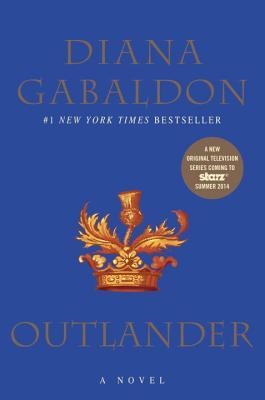
Very different books. Both set in Scotland. There may be a few more Scottish titles on this list. I've been hypnotized by the Edinburgh Book Festival.
I had intended to add book covers and links to all of the books below. But then I'll never get this posted and it's already February. Here goes!
Young Adult
Rodent by Lisa J. Lawrence
Fifteen Lanes by S.J. Laidlaw
Both titles were nominated for the White Pine 2017 awards. Please keep in mind that I'm only listing books which I actually read in 2017. There are a couple of other White Pine 2017 titles that I loved, but I read them in 2016.
Education
Launch: Using Design Thinking to Boost Creativity and Bring Out the Maker in Every Student by John Spencer
Enjoyed meeting up with my Tweeps old and new in the #LaunchBookChat this year!
International
Exit West by Mohsin Hamid
Goblin by Ever Dundas
Essays
Nasty Women by 404 Ink
One Day We'll All Be Dead and None of This Will Matter by Scaachi Koul
Nasty Women led the revolution in the year of the great shake up of #MeToo #BlackLivesMatter and #OscarsSoWhite.
Scaachi Koul's acerbic essays hit the funny bone. Clever book jacket design, too.
Non-Fiction
Sapiens: A Brief History of Humankind by Yuval Noah Harari
Mind blown
The Fact of a Body by Alexandria Marzano-Lesnevich
Finely peeling away the layers of secrets
The Vanishing Man: In Pursuit of Valazquez by Laura Cumming
Winner of the 2017 James Tait Black Prize for NonFiction, a stunning tale of how art can consume us.
Picture Books
The Tale of Tam Linn by Lari Don
Scottish fairytale. A favourite of my niece's.
Journey by Aaron Becker
Only illustrations. Beautiful ones, at that. Great way for pre-literate or early literate children to tell stories.
Literary Fiction
What Belongs to You by Garth Greenwell
Nominated for the 2017 James Tait Black Prize for Fiction
The Last Neanderthal by Claire Cameron
Made me mourn for the extinction of the neanderthal. I want a lip like Girl's. Nominated for the 2017 Rogers Writers’ Trust Fiction Prize.
Mystery
All the Devils by Neil Broadfoot
Broadfoot's writing keeps getting better. Novel is set in Edinburgh. Scotland, yet again!
Glass Houses by Louise Penny
A perennial favourite - it's a good thing that Penny tends to publish a book a year!
Fantasy
A Darker Shade of Magic by V.E. Schwab
This book was partly written in Edinburgh. And it shows.
Short Stories
The 2017 Short Story Advent Calendar by Hingston & Olsen Publishing
Forget about the chocolate - open a new short story every morning leading up to Christmas. Great being introduced to new writers and chatting with other readers about the tales on Twitter. #ssac2017
Poetry
I tend to read bit and bites of poetry, but what got me hooked on poetry this year like never before was the FutureLearn course, "Literature and Mental Health". Highly recommended.
Other Recommendations
This list from Kirsty Logan who read 220 books. Quite a diverse range of books that puts my list to shame. Enjoy!
http://www.kirstylogan.com/best-books-of-2017/
Historical Fiction
- His Bloody Project: Documents Relating to the Case of Roderick Macrae by Graeme Macrae Burnet
- Outlander by Diane Gabaldon
I had intended to add book covers and links to all of the books below. But then I'll never get this posted and it's already February. Here goes!
Young Adult
Rodent by Lisa J. Lawrence
Fifteen Lanes by S.J. Laidlaw
Both titles were nominated for the White Pine 2017 awards. Please keep in mind that I'm only listing books which I actually read in 2017. There are a couple of other White Pine 2017 titles that I loved, but I read them in 2016.
Education
Launch: Using Design Thinking to Boost Creativity and Bring Out the Maker in Every Student by John Spencer
Enjoyed meeting up with my Tweeps old and new in the #LaunchBookChat this year!
International
Exit West by Mohsin Hamid
Goblin by Ever Dundas
Essays
Nasty Women by 404 Ink
One Day We'll All Be Dead and None of This Will Matter by Scaachi Koul
Nasty Women led the revolution in the year of the great shake up of #MeToo #BlackLivesMatter and #OscarsSoWhite.
Scaachi Koul's acerbic essays hit the funny bone. Clever book jacket design, too.
Non-Fiction
Sapiens: A Brief History of Humankind by Yuval Noah Harari
Mind blown
The Fact of a Body by Alexandria Marzano-Lesnevich
Finely peeling away the layers of secrets
The Vanishing Man: In Pursuit of Valazquez by Laura Cumming
Winner of the 2017 James Tait Black Prize for NonFiction, a stunning tale of how art can consume us.
Picture Books
The Tale of Tam Linn by Lari Don
Scottish fairytale. A favourite of my niece's.
Journey by Aaron Becker
Only illustrations. Beautiful ones, at that. Great way for pre-literate or early literate children to tell stories.
Literary Fiction
What Belongs to You by Garth Greenwell
Nominated for the 2017 James Tait Black Prize for Fiction
The Last Neanderthal by Claire Cameron
Made me mourn for the extinction of the neanderthal. I want a lip like Girl's. Nominated for the 2017 Rogers Writers’ Trust Fiction Prize.
Mystery
All the Devils by Neil Broadfoot
Broadfoot's writing keeps getting better. Novel is set in Edinburgh. Scotland, yet again!
Glass Houses by Louise Penny
A perennial favourite - it's a good thing that Penny tends to publish a book a year!
Fantasy
A Darker Shade of Magic by V.E. Schwab
This book was partly written in Edinburgh. And it shows.
Short Stories
The 2017 Short Story Advent Calendar by Hingston & Olsen Publishing
Forget about the chocolate - open a new short story every morning leading up to Christmas. Great being introduced to new writers and chatting with other readers about the tales on Twitter. #ssac2017
Poetry
I tend to read bit and bites of poetry, but what got me hooked on poetry this year like never before was the FutureLearn course, "Literature and Mental Health". Highly recommended.
Other Recommendations
This list from Kirsty Logan who read 220 books. Quite a diverse range of books that puts my list to shame. Enjoy!
http://www.kirstylogan.com/best-books-of-2017/
The Power
 The Power by Naomi Alderman
My rating: 4 of 5 stars
3.5 stars
I remember when I was in university and how we said that if the world were ruled by women, it'd be a much kinder, gentler place.
The Power demonstrates that old adage about how "absolute power corrupts absolutely". The books is immensely readable, but I wanted more of a transformation in the society that was created. Or some sort of realization in the epilogue that is more than just a sly wink (albeit entertaining) between the author and reader.
The book has got a lot of buzz, and provides a good amount of fodder for discussion. A warning for some readers: There are depictions of violence, and two rape scenes.
View all my reviews
Wednesday, 3 January 2018
Autumn by Ali Smith
 Autumn by Ali Smith
My rating: 5 of 5 stars View all my reviews
Read Autumn the way you would a collage painting: What’s the big picture? What’s in the details? How does the story all hang together, and what do we imagine happens next? Autumn is a painting made up of words, as Daniel shows Elisabeth when he asks her to close her eyes and imagine as he describes a collage by Pauline Boty. Elisabeth is able to recognize the painting when she actually sees it.
Sixties icons play a central role in the novel: Pauline Boty, as well as Christine Keeler (who was the subject of one of Boty’s paintings), serve as totems for us to examine our present time. In an article by Ali Smith herself, she describes the work of Pauline Boty as dropping “us head-first into a dream, and when the dream turns into a nightmare she slaps it in the face, wakes up into what’s now a multilayered narrative of dreamworld and mundanity” [1]. Quite often in the book, when things seem to be quite grim for Elisabeth (and the world), Daniel shows how art can lift you out of the darkness.
Sixties icons play a central role in the novel: Pauline Boty, as well as Christine Keeler (who was the subject of one of Boty’s paintings), serve as totems for us to examine our present time. In an article by Ali Smith herself, she describes the work of Pauline Boty as dropping “us head-first into a dream, and when the dream turns into a nightmare she slaps it in the face, wakes up into what’s now a multilayered narrative of dreamworld and mundanity” [1]. Quite often in the book, when things seem to be quite grim for Elisabeth (and the world), Daniel shows how art can lift you out of the darkness.
 |
| Ali Smith, writer, signing books at the Edinburgh International Book Festival. By Tim Duncan. From Wikimedia Commons. |
Christine Keeler’s role seems to guide us to the question, “What happens culturally when something is built on a lie?” [2]. The fallout from Brexit is definitely in the book, from the comically absurd task of applying for a passport, the fences around common land, and the spray painting of “GO HOME” on people’s houses. Ali Smith uses fiction and painting to remind us “to read the world as a construct. And if you can read the world as a construct, you can ask questions of the construct and you can suggest ways to change the construct. You understand that things aren’t fixed” [2].
Initially, I thought about giving the book a four star rating because of its lack of resolution. But you have to stare at the novel, dissect it, make connections, and do research. By God, did Smith do a lot of research - which is not immediately apparent, especially considering the speed with which this book was written and published: “Maybe an accelerated news cycle requires accelerated art” [2].
We live in the era that comes after Rule Britannia (political empire) and Cool Britannia (the resurgence of the cultural empire). Does Europe and the rest of the world ask what happens Post-Britannia? What has the empire stood for, for us? Smith looks to the art of Pauline Boty and her final testament: A “message of undying hope, of solidarity with the oppressed, and of certainty about the future that gave all us us more than courage. Determination” [1].
Works considered while writing this wee review:
[1] Ali Smith on the prime of pop artist Pauline Boty
Sunday, 26 November 2017
Enter the Darkness
As we head into darker days and longer nights, we celebrate what scares us. Perhaps, in our fear, we will cling to each other to keep safe until the daylight comes. Or perhaps the darkness will follow us - as Del Toro wishes - home.
Here are three of my favourite spooky things from this year:


Here are three of my favourite spooky things from this year:
- "Time Warp Saloon" from Epidsode 2 Lost in Time https://spookedpodcast.org/
- The Ghost Box from Hingston & Olsen https://www.hingstonandolsen.com/store/the-ghost-box
- The AGO's Guillermo Del Toro Exhibit: At Home with Monsters https://ago.ca/exhibitions/guillermo-del-toro


Saturday, 21 January 2017
His Bloody Project
 His Bloody Project: Documents Relating to the Case of Roderick Macrae by Graeme Macrae Burnet
My rating: 5 of 5 stars
Coincidentally, after I finished this book, I listened to a CBC program about Indigenous issues in Canada. Both the book and the interview shared the following aspects:
-19th century racial theories;
-Colonial control over native peoples (in the book's case, the English over the Highlanders);
-and the power struggle between people who are kept under the heel of others.
The powerlessness of Roderick Macrae is what has stuck with me. As Bob Rae said in the interview: "People need the power to control their own lives" or else tragedy follows.
So despite my lack of an "a-ha moment" while reading the novel, I found I gained insight upon digestion.
FYI link to the Interview: http://www.cbc.ca/radio/outintheopen/...
View all my reviews
The Storm
 The Storm by Neil Broadfoot
My rating: 4 of 5 stars
A fast-paced and sometimes gory crime story set in Edinburgh, Scotland - with a visit to the Isle of Skye. Part of the fun of this book is to see notable places mentioned and to hear a Scottish voice telling the tale. I thoroughly enjoyed being back in Scotland again.
The murder investigation is told from two points of view: one, a scalawag journalist; and two, a bright, ambitious police officer who doesn't fit into the mold. Even though Doug and Susie are kept apart in this book, their relationship is revealed and further complicated by the introduction of Rebecca to the series. To make matters worse in this triangle, Susie and Rebecca are friends. How could you, Doug?
View all my reviews
Sunday, 20 November 2016
Worlds of Ink and Shadow
 Worlds of Ink and Shadow by Lena Coakley
My rating: 5 of 5 stars
Really enjoyed reading this book: It made me believe that many fictional characters are living real lives in alternate realities. Great way to understand the inspirations for the novels of the Bronte sisters. Worlds of Ink and Shadow is a YA book, but as an adult reader, I am frustrated that some of the darker aspects of the Brontes (repressed sexuality, ambition, and rivalry) isn't explored more fully. Hmmm, guess I should pick up a copy of Wuthering Heights or Jane Eyre.
4.5 stars - keep thinking about this book
View all my reviews
Sunday, 13 November 2016
The Best Kind of People
 The Best Kind of People by Zoe Whittall
My rating: 5 of 5 stars
Solid, crafted writing from an unusual perspective: the wife, son and daughter of someone accused of sex crimes. The book details their year of living in isolation and suspension.
View all my reviews
Wednesday, 9 November 2016
Reading List for a Trumpish America
Some context, after the election. Five new books and one oldie, but a goodie.

“Offred is a Handmaid in the Republic of Gilead, once the United States of America” (back cover).

“America is on the verge of anarchy. Survival is all that matters now” (front cover).

“Trump, the silver spoon-fed child who, as a second grader, punched his music teacher in the eye, aspired ‘to be the toughest kid in the neighborhood’” (5).

“The public utterances of almost every populist politician today include the refrain ‘Take back control’” (31).

“The birthers cut straight to the chase and argued that Obama’s birth certificate was phony and that he was not born in America, a claim amplified by billionaire political huckster...Donald Trump” (135).

“During World War II, America’s fledgling aeronautics industry hired black female mathematicians to fill a labor shortage. These ‘human computers’ stayed on to work to NASA and made sure America won the Space Race. They fought for their country’s future, and for their share of the American dream. This is their untold story” (front cover).
Tuesday, 18 October 2016
Do You Need Help?
I've noticed something lately. Cars parked awkwardly at the side of the road, sometimes in places (such as a roundabout) where it's not really safe to stop.
It turns out there's no emergency. I see the driver a few feet away holding up his phone. It's October and since everyone is carrying a phone with them at all times, there doesn't seem to be any reason not to stop and capture the beauty of the leaves.

It turns out there's no emergency. I see the driver a few feet away holding up his phone. It's October and since everyone is carrying a phone with them at all times, there doesn't seem to be any reason not to stop and capture the beauty of the leaves.

Sunday, 16 October 2016
Girl Mans Up
 Girl Mans Up by M-E Girard
My rating: 5 of 5 stars
Wow! What a great way to spend a weekend. M-E Girard's Girl Mans Up first impressed me with its universalism on how we all have to deal with the vagaries of love. The book deals with gender, sexuality, family drama, high school bullies, peer pressure, friendship, videogames! and grabbing your own power.
The protagonist, Pen, is a girl who is mistaken for a boy, but defies categorization. When someone asks her if she is a gay girl, Pen thinks: "I don't think of myself as being gay, because that word sounds like it belongs to some guy. Lesbian makes me think of some forty-year-old woman. And queer feels like it can mean anything" (65). The one thing that Pen is adamant about is that she is a girl.
Out of the two female relationships Pen has in the book, I find her friendship with Olivia the most interesting. There's more growth between those characters, maybe because there is much more at stake. The love interest, Blake, is definitely kick-ass, but restricted in her role as the object of desire. That said, their scenes together are well written: not graphic, but plenty to activate the imagination.
The guys in the book don't come off well. The opening chapters of Pen hanging out with the boys have a greasy feel. Maybe those guys just need to Woman Up.
Except Johnny, of course. I love Johnny. We all need a big brother like Johnny.
View all my reviews
The Return of History
 The Return of History: Conflict, Migration, and Geopolitics in the Twenty-First Century by Jennifer Welsh
My rating: 5 of 5 stars
Four and a half stars
I have to admit, I had some trouble getting into the first two essays, but the book picks up power and speed with the last three: The Return of Mass Flight; The Return of the Cold War; and The Return of Inequality. Jennifer Welsh clearly explains the times we are living in. Scary. The coming American election has become all that more important in my eyes.
Vital reading to fix the cracks in our liberal democracies.
Listen to the Massey Lectures on CBC Radio's Ideas from Mon Oct 31 to Fri Nov 4.
View all my reviews
Monday, 3 October 2016
Between Buddha and the Bible: The Mercy Journals
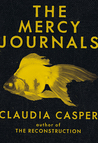 The Mercy Journals by Claudia Casper
My rating: 5 of 5 stars
Four and a half stars
The book opens with a brief explanatory prologue: In 2072, these journals have been found next to the human remains of an adult male, a pistol and a cougar. The journals begin in the year 2047, after a third of humanity has died off due to war, ecological collapse and a flu pandemic. There’s a new world order where the state has much more control of its citizens, doling out rations for food, power and data. The younger generation find that they like this socialist lifestyle and are angered by those who still insist on being wasteful and greedy, while a murky resistance group criticizes the state.
Our hero and writer of the journals is Allen Quincy, a war veteran who is almost permanently holed up in his apartment fighting PTSD. He comes back to life when he meets the singer and dancer, Ruby. They quickly become lovers. She, herself, is dealing with the damage from the past; her performances are an exorcism of that time because she is “afraid we’ll stop the process of destroying and tearing down too soon. We need to keep going if we’re going to break through to something truly different” (99).
Quincy began to write these journals in his own attempt at obliteration. He reads a quote from Socrates that “[w]riting destroys memory” (17) and so he describes his world in an attempt to rid himself of his taunting PTSD visions. These visions stem from a calamitous army tour defending the border after Mexico ran out of water. From his time there, he earned the nickname, Mercy.
The book is made up of two parts: Journal One is a meditation on writing and memory. When recording the first time he met Ruby, Quincy realizes that his writing may be “accurate but [he still] left so much out. The part is made to stand for the whole, and then the part becomes the whole” (151).
In Journal Two, the book becomes a thriller. I found that answers to questions about characters are left implied, so that you can let your imagination get away with itself. The re-entry of Quincy’s brother Leo into the story creates a tension; Leo’s actions are underscored by incredible malice. Language becomes a slippery thing. Where once Quincy wrote to forget, around Leo he is hesitant to ask questions because “asking was a submissive act; it left you waiting for an answer, vulnerable to a lie” (222).
Like in Margaret Atwood’s The Handmaid’s Tale, Canada is seen to be some sort of haven: the place Americans escape to. Quincy, Leo and Leo’s stepson, Griffith head up to Vancouver Island where their family had a cottage named Nirvana. The band is mentioned a couple of time, as well as Buddhist philosophy. There’s also the paradigm of Cain and Abel and talk of beginning a “new covenant” (228). Ostensibly, they are there to find Quincy’s lost sons, as Leo has reported that they have been spotted. They go deeper into the forest, and away from what they knew as civilization.
Initially, I found myself comparing The Mercy Journals to Cormac McCarthy’s The Road - sparse writing style, limited punctuation and almost as bleak. There’s also a little bit of Conrad’s Heart of Darkness when journeying up the river and having to deal with Kurtz.
Claudia Casper’s writing and observations are exquisite. The split nature of the novel (part meditation, part thriller) may bother some readers, but the book made me think and kept me wanting to read past my bedtime.
There’s something about dystopian novels that I really like: Station Eleven, Hunger Games. My husband hates them: He says they’re too dark. Maybe I am a pessimist of the highest order. But I find these kinds of books are ultimately about faith in humanity - how low we can go and still survive.
The Mercy Journals is highly recommended.
View all my reviews
Saturday, 1 October 2016
Book Signing
At the Edinburgh Book Festival, I attended an interview with a former pro athlete who had written a book. He was very animated and outgoing during the talk - even leaping up to kiss a woman at the back of the auditorium.

I sometimes dread asking an author to sign my book because it's hard for me to make small talk with someone who doesn't mind spending hours alone scribbling. Based on his personality during the interview, I thought that this elite athlete would be a chatterbox.

But as the long line coiled out the door and around the gardens, the author looked petrified as the queue never seemed to end. When I got to him, I tried to be chirpy and upbeat, but the work of performance had worn him down.
An introvert. Like me.


But as the long line coiled out the door and around the gardens, the author looked petrified as the queue never seemed to end. When I got to him, I tried to be chirpy and upbeat, but the work of performance had worn him down.
An introvert. Like me.
Wednesday, 31 August 2016
Edinburgh
What's not to love about Edinburgh? If it's not the open madness of the festivals in August, how about the fact that they have poetry inscribed on the walls of their parliament and on the pavement of Makar's Court? Or that they have the greatest collection of T.A.R.D.I.S.s that I've ever seen. This fact only verifies that Dr. Who is undoubtedly Scottish.


Wednesday, 13 July 2016
Page 110
In light of recent events, page 110 got me thinking...

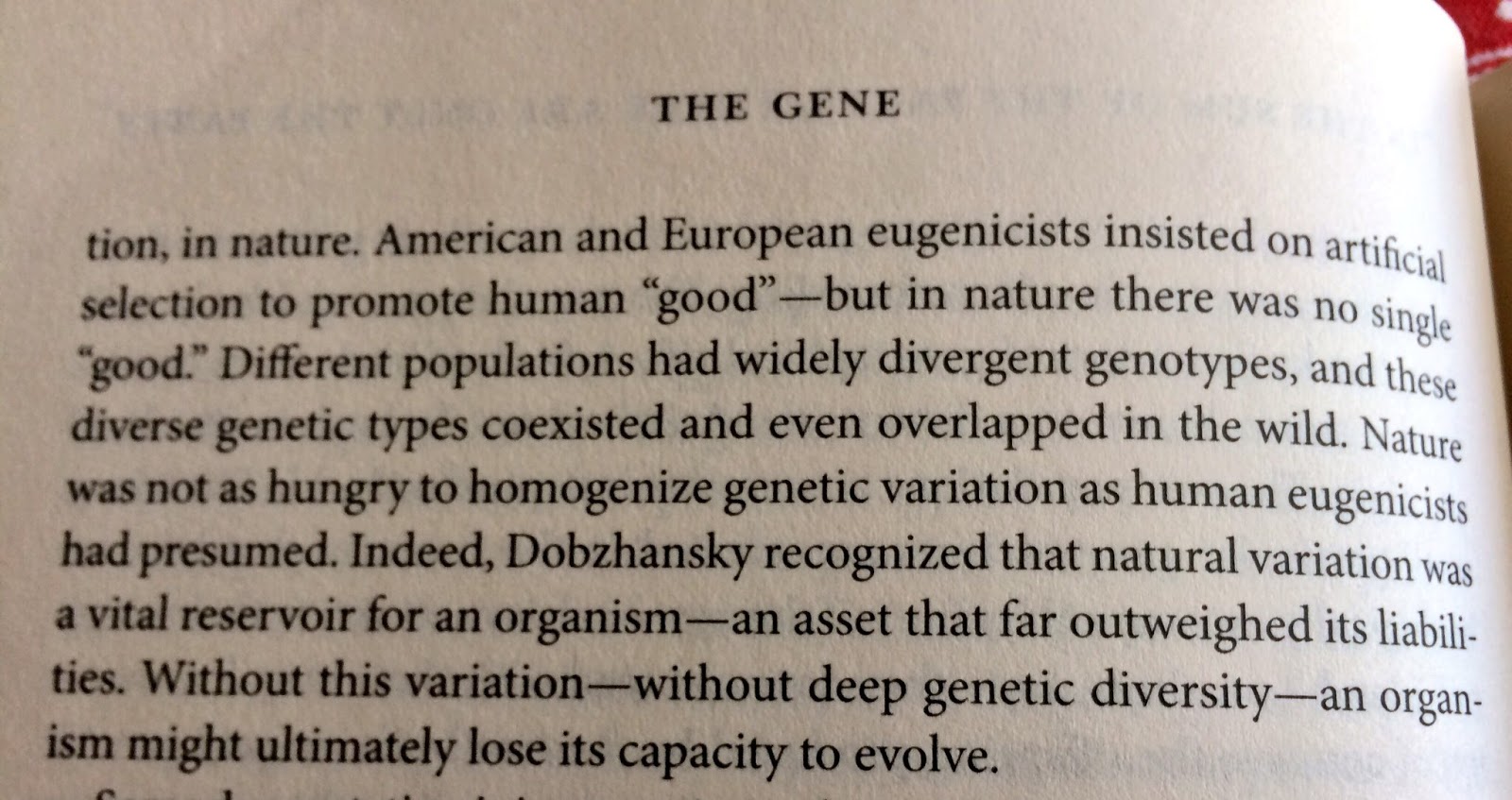
And then page 352 came along

The Context
Why you should stop saying "all lives matter," explained in 9 different ways (2016)
LGBTQ activists call for scrapping sex markers on ID cards (2016)
LGBTQ activists call for scrapping sex markers on ID cards (2016)
Wednesday, 28 January 2015
Sharp Tools, Dull Minds & Thinking Magic
I was reading Nicholas Carr's The Glass Cage: Automation and Us when I came across this passage:
Carr, Nicholas. The Glass Cage: Automation and Us. New York: W.W. Norton, 2014. Print.
Why not? It's easier and I don't have to waste time on the nit-picky stuff. Haldar draws this "verdict: 'Sharp tools, dull minds'" (78).

I remember hearing how calculators would make us lazy when I was a tot in school. But we wouldn't take back the calculator from education these days, would we? Students are now free to move onto more practical applications of mathematics since calculators have liberated them from memorizing times tables.
But reading Nicholas Carr's book reminded me of the time, early one morning, a student asked me, "When will the library open?"
I replied, "In five minutes."
For some reason, the student then asked, "How many seconds is that?"
I paused for a moment and then said, "300."
The student was shocked: "How did you do that? How did you calculate that in your head?"
Magic.

Image credits:
Artificial intelligence. Photograph. Encyclopædia Britannica ImageQuest. Web. 28 Jan 2015.
http://quest.eb.com/#/search/107_295715/1/107_295715/cite
Magicians at the Carnival in Berlin, 1836 . Fine Art. Encyclopædia Britannica ImageQuest. Web. 28 Jan 2015.
http://quest.eb.com/#/search/108_277187/1/108_277187/cite
"Modern [applications] are getting 'helpful' enough that at times I feel like an [application] operator than a programmer," writes Vivek Haldar, a veteran software developer with Google. "The behavior all these tools encourage is not 'think deeply about your code and write it carefully,' but 'just write a crappy first draft of your code, and then the tools will tell you not just what's wrong with it, but also how to make it better" (78).Like the programming tools mentioned above, "applications automate many tricky and time-consuming chores" (78). Even though I know how to create a reference from scratch, I used BibMe.org to create the following citation:
Carr, Nicholas. The Glass Cage: Automation and Us. New York: W.W. Norton, 2014. Print.
Why not? It's easier and I don't have to waste time on the nit-picky stuff. Haldar draws this "verdict: 'Sharp tools, dull minds'" (78).
I remember hearing how calculators would make us lazy when I was a tot in school. But we wouldn't take back the calculator from education these days, would we? Students are now free to move onto more practical applications of mathematics since calculators have liberated them from memorizing times tables.
But reading Nicholas Carr's book reminded me of the time, early one morning, a student asked me, "When will the library open?"
I replied, "In five minutes."
For some reason, the student then asked, "How many seconds is that?"
I paused for a moment and then said, "300."
The student was shocked: "How did you do that? How did you calculate that in your head?"
Magic.
Image credits:
Artificial intelligence. Photograph. Encyclopædia Britannica ImageQuest. Web. 28 Jan 2015.
http://quest.eb.com/#/search/107_295715/1/107_295715/cite
Magicians at the Carnival in Berlin, 1836 . Fine Art. Encyclopædia Britannica ImageQuest. Web. 28 Jan 2015.
http://quest.eb.com/#/search/108_277187/1/108_277187/cite
Monday, 26 January 2015
As Good as It Gets
Why travel?
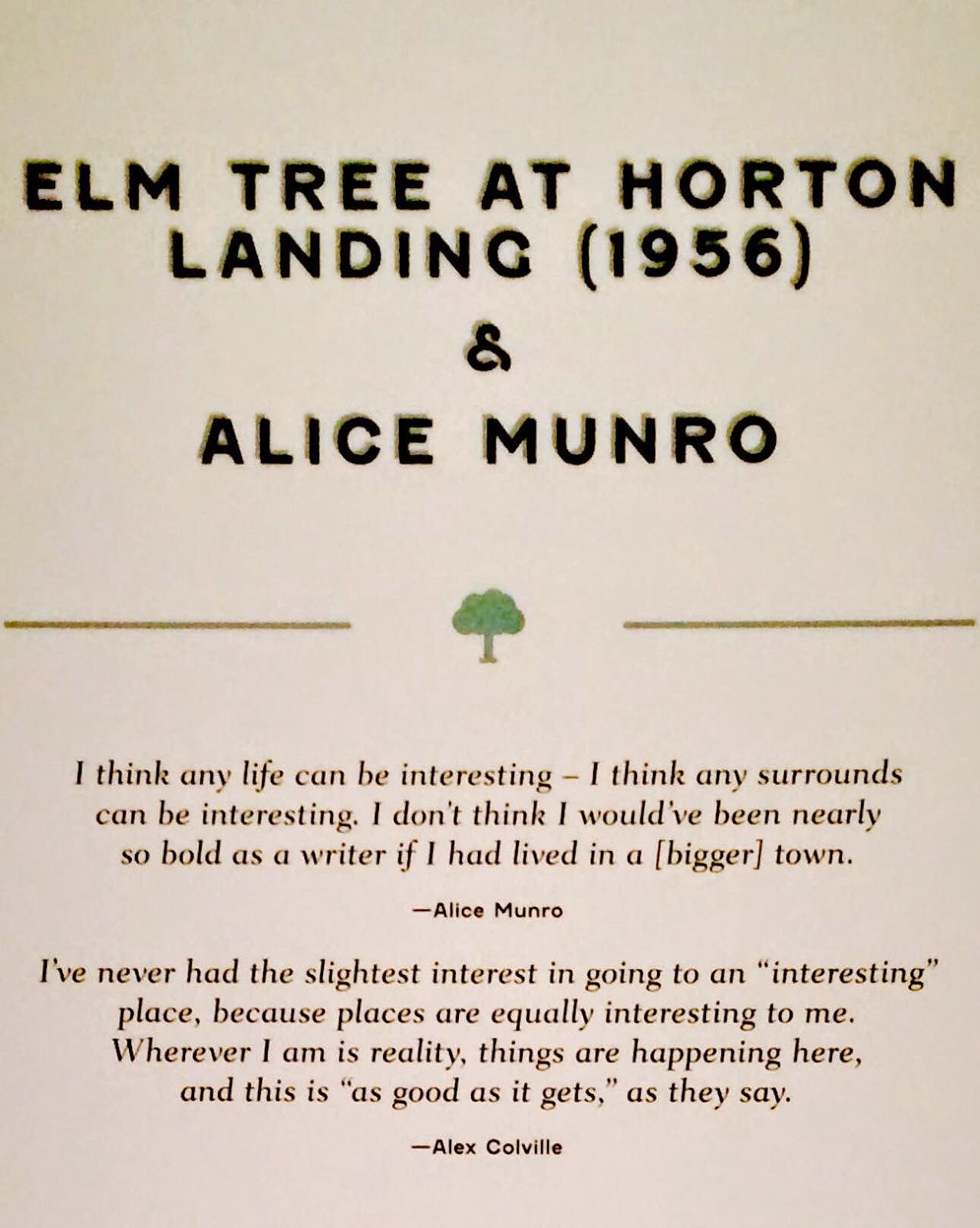
Picture taken at the AGO's Alex Colville exhibition December 30, 2014.
Subscribe to:
Posts (Atom)